
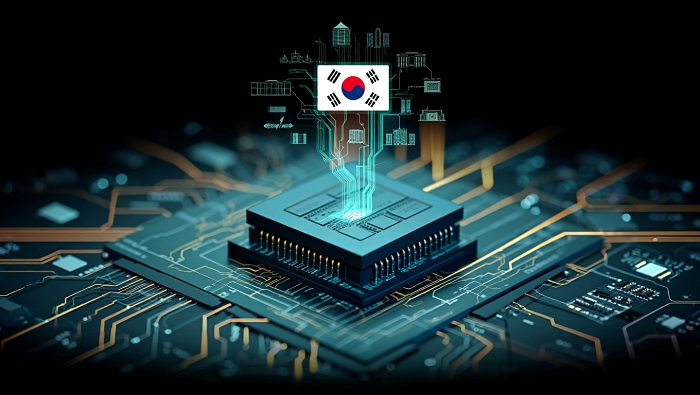
TSMC's production capacity has reached its limit, putting Samsung Electronics in the spotlight as an alternative foundry for global companies.
An online outlet, Gigazine, reported on Thursday that demand for semiconductors has surged on the AI boom, pushing the world's largest foundry, TSMC, close to the limits of its production capacity. It said major companies including Google, Nvidia, Tesla, AMD and BYD are known to be considering Samsung Electronics' foundry as an alternative.
TSMC is seen as a company with unrivalled competitiveness in advanced semiconductor manufacturing. It has maintained an edge over rivals in advanced process technologies such as 2 nm and 3 nm, as well as in production yields, leading the advanced-process market. On the back of that capability, major chip design firms including Apple, Nvidia, AMD, Broadcom, Marvell and MediaTek have been outsourcing production to TSMC.
But as demand for advanced semiconductors has surged with growth in the AI industry, competition to secure production lines has intensified further. Even Apple is known to have been put in a situation where it must compete with Nvidia over production volumes. TSMC is seeking to expand capacity, but building semiconductor production facilities requires large investments and lengthy processes, making it difficult to increase supply in the short term.
The situation is creating a new opportunity for Samsung Electronics, which has advanced-process production capabilities. Samsung is one of a small number of companies that can run advanced processes of 5 nm and below, and is seen as being in a position to secure volumes TSMC cannot absorb. Several global companies are reported to be in talks with Samsung over next-generation semiconductor production.
Google, for example, is considering entrusting Samsung with production of key components for a TPU for AI workloads that it is co-designing with MediaTek. It is also known to be in discussions with Samsung regarding production of Axion, a next-generation AI accelerator.
AMD and BYD are also sounding out the possibility of cooperation with Samsung. AMD has been mentioned as potentially working with Samsung to produce next-generation EPYC server CPUs. China's electric vehicle maker BYD is reported to be in talks with Samsung over production of semiconductors for self-driving vehicles.
Nvidia is also being discussed as potentially expanding its use of Samsung's foundry. Nvidia is producing the latest chip from AI accelerator company Groq at Samsung's foundry and is also considering outsourcing next-generation chip production. Tesla plans to produce its next-generation A16 chip at Samsung's plant in the U.S. state of Texas. Neuralink, founded by Elon Musk, is also known to have held negotiations with Samsung to produce next-generation brain implant chips.
Samsung's foundry business has posted losses of trillions of won so far. Still, the business environment is changing as expanding demand for AI semiconductors increases opportunities to secure new customers. The industry forecast that if the trend continues, the likelihood will grow for improved profitability and a return to the black at Samsung's foundry business.
 Hong Kyung-min
hongm@d-today.co.kr
Hong Kyung-min
hongm@d-today.co.kr