
Nexth's acquisition of OneStore is closer to a strategy to directly own a game distribution channel than a simple move to secure management control of an app market. Nexth has built infrastructure around game platforms such as blockchain, wallets, payments, communities, quests and rewards. The acquisition gives it a distribution touchpoint where users and developers meet.
On June 19, the industry said Nexth held a board meeting on June 18 and decided to acquire 20,247,990 OneStore shares for about 62.6 billion won. Its stake after the acquisition will be 89.03%. The sellers are SK Square, Naver, Steel No.1 First and Krafton. Among them, SK Square, Naver and Krafton will transfer their OneStore stakes but participate as strategic investors in Nexth. They will no longer be direct shareholders of OneStore but will remain involved as Nexth investors under a new governance structure.
This structure differs from a simple transfer of management control. OneStore is an app market launched on the back of South Korea's three telecom operators and Naver, and its business foundation could weaken if existing partnerships are shaken. The fact that major existing shareholders remain as Nexth investors is seen as a signal that cooperation with the OneStore ecosystem will continue after the acquisition. Nexth plans to keep existing content distribution business lines such as games, apps, webtoons and web novels, as well as relationships with key partners including telecom operators.
◆ Transplanting blockchain and AI capabilities into OneStore, shifting to a game hub
The first synergy Nexth expects from OneStore is a shift into a domestic game hub. OneStore is an app market installed on more than 38 million devices in South Korea. Nexth plans to combine its own full-stack game platform capabilities, including a web shop, payments, community, quest platform, streamer platform and reward system. If OneStore was previously a distribution window for downloading apps and games, it now aims to expand into a platform that bundles game discovery, payments, communities, rewards and operational support.
The approach targets both users and developers. For users, it offers an integrated experience to find and play games and use community and reward functions. For developers, it offers a one-stop solution supporting user acquisition, community operations, game economy management, marketing, rewards and live operations. Nexth says the advantage is that developers can use the functions needed for game services at once without building separate systems.
In that case, the effect Nexth is seeking is diversification of revenue sources. If existing app market revenue depended on sales and commissions from listed games, the game hub model could broaden revenue touchpoints to payments, web shops, marketing, communities, operational tools and rewards. If OneStore's user base is combined with Nexth's operating infrastructure, developers' platform dependence could also increase.
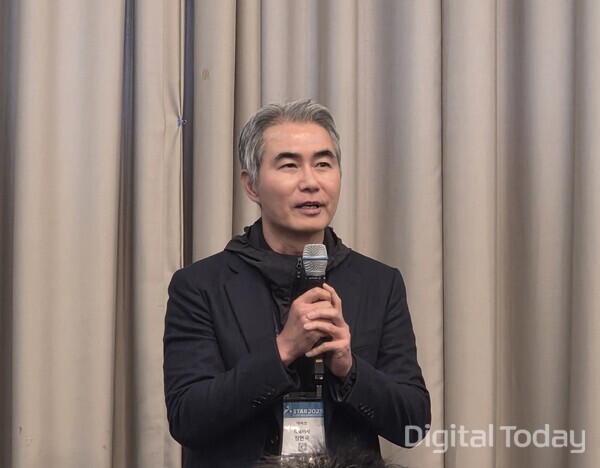
The second synergy is global web3 game distribution. Nexth set a goal of converting OneStore's global version into a blockchain-based web3 game store. It says the background is a view that under existing Google and Apple app market policies, web3 games have difficulty fully implementing functions such as wallets, tokens, staking, bridges and decentralised exchanges. CEO Hyun-kuk Jang (장현국) said, "To launch a web3 game on Google and Apple's stores, we had no choice but to change part of the service, which damaged the user experience," explaining the background to the acquisition.
Nexth plans to equip OneStore with web3 functions such as wallets, stablecoins, decentralised exchanges, staking and bridges to fully support web3 experiences inside and outside games. The goal is a single global build platform linking "all games, all chains, all markets."
Brand integration is also linked to this. Nexth plans to change the mainnet of its on-chain game platform, "CROSS," to "OneChain," and its native token, "CROSS($CROSS)," to "ONE($ONE)." It aims to tie OneStore, OneChain and the ONE token into a single brand system, putting a domestic app market and a global blockchain game platform under the same identity. This is interpreted as an intention to treat the OneStore acquisition not as a simple equity deal but as a starting point for restructuring Nexth's overall business structure.
A third pillar is an AI-native game platform. Nexth expects AI to lower barriers to game creation and significantly increase future game supply. In that case, it says the existing method of having people review and surface content alone would make it difficult to efficiently categorise a vast number of games. Nexth presented a strategy to develop OneStore by analysing games made by humans and AI in real time and connecting them to users.
At that point, OneStore's role shifts from a market that shows registered apps to a discovery platform that selects and connects games. The underlying view is that in a phase of content oversupply, distribution platforms' competitiveness could move from the sheer number of games they have to the efficiency of recommendation and discovery.
◆ Financial burden, merchant departures and regulation leave distance to realising synergies
Still, challenges remain before synergies are realised. OneStore launched as a leading domestic app market but has faced growth stagnation as it failed to move beyond an app market structure centred on Google and Apple. OneStore revenue fell to 133.5 billion won in 2024 from 167.4 billion won in 2023, and to 113.3 billion won in 2025. Net losses over the same period were 33.3 billion won, 35.5 billion won and 7.6 billion won, remaining in the red. The deficit narrowed, but the decline in scale continued.
For Nexth, the financial burden is also not light. The acquisition amount equals 84.63% of Nexth's total assets and 164.52% of its equity capital. It is a structure in which an amount exceeding equity is put into a single asset acquisition. With OneStore continuing to post losses and Nexth also recording losses in its core business, securing an early path to improved profitability is a key task.
Maintaining relationships with existing merchants is also a variable. Nexth said it would stably continue OneStore's content distribution business lines for games, apps, webtoons and web novels. But if the platform's identity shifts strongly toward web3, it is difficult to rule out the possibility that existing game companies or content businesses that are cautious about web3 may feel distance. Nexth needs a balance that pursues the new direction of a web3 game store without undermining OneStore's existing revenue base.
South Korea's regulatory environment is also a variable. Web3 games are currently blocked from official domestic release due to gambling-related review regulations. If OneStore is to function as a bridgehead for legitimising web3 games in South Korea, institutional change must accompany it. Global expansion also needs a long view. OneStore is a platform proven in South Korea, but it has virtually no awareness overseas. With Google and Apple dominating the global smartphone market, OneStore's global version would need to secure killer content first to build a user base.
Ultimately, the success or failure of this acquisition depends more on a conversion in transaction volume than on a "technology combination." Adding web3 functions, AI curation, communities and a reward system to OneStore alone does not guarantee improved results. It must simultaneously create reasons for developers to choose OneStore as a main distribution channel, for users to return to OneStore and for existing merchants to stay.
Nexth's acquisition of OneStore is meaningful in that it is a case of a blockchain game platform company directly securing a distribution channel. Nexth had infrastructure and technology but lacked a distribution touchpoint, while OneStore had a user base and partnerships but had weakened growth momentum. Their combination fills each other's gaps. Still, for this combination to translate into actual results, it must gradually establish new functions as a game hub, a web3 store and an AI-native platform while maintaining OneStore's existing business. The direction of synergies has been presented, but the actual effect is expected to be determined in post-acquisition integration execution rather than in the acquisition itself.
 Ho-jung Lee
lhj@d-today.co.kr
Ho-jung Lee
lhj@d-today.co.kr