
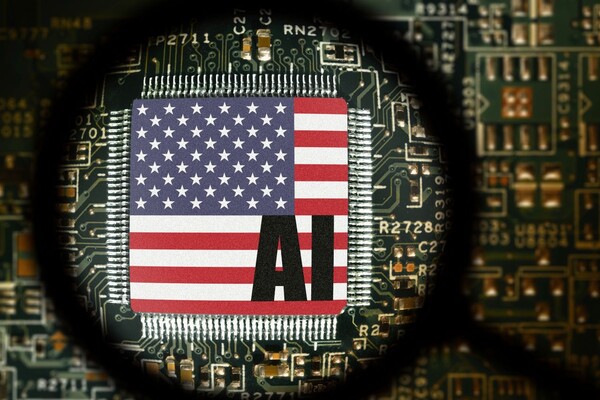
[DigitalToday Yoo Seung-a] Jensen Huang (젠슨 황), CEO of Nvidia, acknowledged that he had an inappropriate relationship with a woman suspected of being a Chinese intelligence agent, setting off alarm bells for U.S. leadership in artificial intelligence (AI). Concerns are growing that the matter could go beyond reputational damage for Nvidia and affect the U.S. AI industry’s semiconductor supply chain and national security.
On Nov. 10 (local time), The Verge reported that experts said the incident could shake the United States’ technological edge over China.
At the core is that Nvidia leads the supply of advanced semiconductors, a key bottleneck for the U.S. AI industry. Developing AI models requires talent, electricity, capital and data, but high-performance chips are among the hardest critical resources to secure. Meta, Anthropic and OpenAI have moved to develop their own chips to reduce dependence on Nvidia. Even so, replacing massive near-term computing demand is not easy.
Due to U.S. restrictions on exports of advanced AI chips to China, China is having difficulty securing the latest Nvidia chips. China is pursuing domestic semiconductor development as a national strategy, but is assessed to still lag Nvidia in the most advanced areas. Against that backdrop, concerns are rising that if China can access Nvidia chips more easily, it could quickly narrow the AI technology gap.
Emily Kilcrease (에밀리 킬크리스), a senior fellow at the Center for a New American Security (CNAS), said China has strengths in areas such as energy and the open-source AI model ecosystem, but without the latest Nvidia chips it would be difficult to catch up with the United States’ most advanced AI capabilities. She warned that if China secures those chips, “America’s advantage could disappear in a matter of weeks or months.”
Still, there is no public evidence so far that Huang directly handed export-controlled chips to China or provided related secrets. Reports that companies linked to Alice Huang enabled sales of at least $7.0 billion worth of Nvidia chips to China have also raised questions about supply chain management. Kyle Chan (카일 찬), a researcher at the Brookings Institution, said that if firms suspected of ties to China got priority access to the latest graphics processing units (GPUs) amid chip shortages, it could have made it harder for U.S. companies to secure chips.
Information China could obtain would not be limited to semiconductor designs. Sunny Cheung (서니 청), a China-focused researcher at the Jamestown Foundation, said that because Huang has had wide-ranging contacts with executives at major U.S. companies, policymakers and President Donald Trump, information on U.S. companies’ infrastructure investment plans, computing demand and the White House’s export-control stance could also have strategic value for China.
Turmoil inside the U.S. AI industry is also a variable. Huang is a key figure who has led Nvidia’s management since co-founding the company more than 30 years ago. With an internal probe under way over the allegations, concerns are rising that decision-making by management, product launches and allocation of limited chips could face disruptions. Kilcrease said AI labs such as OpenAI and Anthropic, along with major cloud companies, could struggle to secure the computing resources they need. She said switching to other hardware would also take time.
With the AI technology gap between the United States and China not large, delays in U.S. companies’ development schedules could give Chinese competitors time to catch up. Still, the incident may not work only in China’s favor. Kilcrease said the situation has greatly increased the likelihood of U.S. congressional legislation to control AI chips. That could also mean regulations aimed at blocking China’s access to technology may be strengthened.
 Yoo Seung-a
ysah@d-today.co.kr