
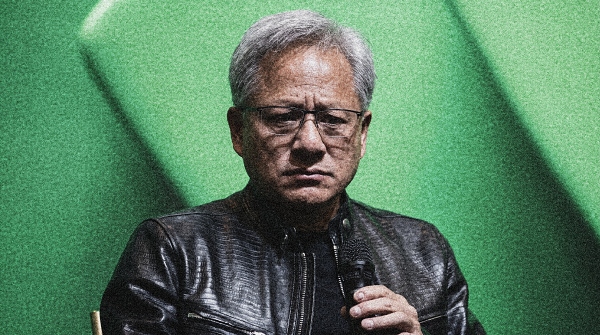
Nvidia's board has launched an independent probe into allegations involving CEO Jensen Huang, bringing the issue of a missing successor back into focus.
On Nov. 9, Jensen Huang acknowledged an inappropriate relationship with Alice Huang, an executive at a major Nvidia customer. Alice Huang is also under suspicion by U.S. authorities of acting for a Chinese intelligence agency.
The core issue is not only whether Jensen Huang stays, but also that Nvidia has no obvious successor if he steps down. Huang has led the company for more than 30 years and is a central figure in the artificial intelligence semiconductor industry. He has also been directly involved in large-scale investments and guarantees for dozens of AI startups and data centre operators. His influence across the industry is also significant, including calls on the U.S. government to ease AI regulations.
The market is also watching the possibility of a management vacuum. Nvidia shares fell more than 5 percent intraday on Nov. 10. The drop followed broader weakness in AI-related stocks and Nvidia losing the top spot in global market capitalisation to Apple, while management uncertainty added to the pressure. Sequoia Capital partner Sean Maguire called Jensen Huang an irreplaceable figure for U.S. leadership in AI. Bernstein also underscored his influence, saying, "Jensen Huang is Nvidia."
The issue is that there is no specific succession plan. Nvidia's annual report and corporate governance disclosures, unlike those of other big tech companies, do not set out CEO succession procedures. They also do not give a detailed explanation of how a successor would be chosen in an emergency, offering only a general position that the company pursues broad executive development. As of the 2024 disclosure, more than 60 executives report directly to Jensen Huang, but there is no clear figure being mentioned as the next CEO among them.
Key executives currently include CFO Colette Kress, head of operations Debora Shoquist and chief legal officer Tim Teter. Jay Puri, who supported Jensen Huang in overseas sales and external affairs, stepped down in August, and former Microsoft executive Nick Parker joined the leadership team. Still, analysts say it would not be easy for any one executive to replace Huang's role, as he has personally led marketing, sales and overall product development.
The board decided to set up a special committee made up of current directors and investigate the allegations with outside legal counsel. Director Stephen C. Neal, a former Cooley CEO, is expected to participate in the probe. The board expressed confidence in Jensen Huang and management, and said it had found no basis to conclude that national security or Nvidia's internal information had been compromised.
Corporate governance is also a factor. Jensen Huang is Nvidia's largest individual shareholder with a 3.6 percent stake, valued at more than $150 billion, or over 200 trillion won. Unlike Meta's Mark Zuckerberg or Google co-founders Larry Page (래리 페이지) and Sergey Brin (세르게이 브린), he does not have dual-class voting rights that would allow him to control board voting power. Nvidia's board also has no separately designated chair. The company has said the structure is intended to ensure all directors have equal say.
Jensen Huang has not indicated an intention to resign. Still, the controversy has highlighted a structural vulnerability at Nvidia, where management capacity is concentrated in a single founder. Whether Nvidia can establish a management system for the post-Huang era, along with the special committee's findings, is emerging as a key issue going forward.
 Seung-a Yoo
ysah@d-today.co.kr