
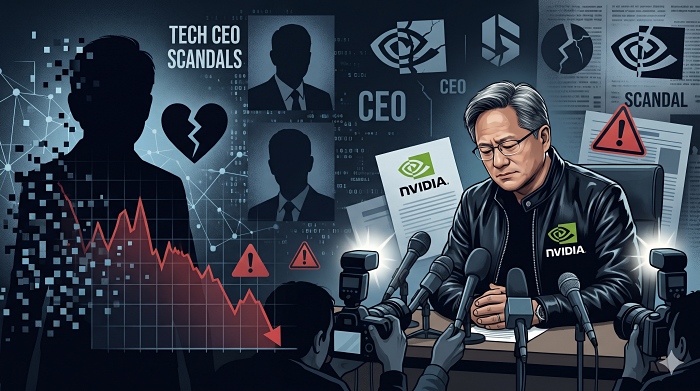
Nvidia CEO Jensen Huang (젠슨 황) has admitted infidelity, bringing renewed attention to how tech industry CEOs have responded to romance and affair scandals in the past, U.S. business outlet Business Insider reported on Monday. As debate has spread to include Huang's future, interest inside and outside the industry is growing.
The most aggressive response came from Amazon founder Jeff Bezos. After U.S. celebrity outlet National Enquirer reported text messages between Bezos and former broadcaster Lauren Sanchez in 2019, he posted a lengthy piece on the blogging platform Medium. He claimed the Enquirer's parent company had engaged in "extortion and blackmail" and published emails that he said threatened to release intimate photos. Bezos wrote: "I'm going to roll this log and see what crawls out." American Media Inc (AMI), which owned the Enquirer, said it acted in accordance with the law. Bezos kept his CEO job for about two more years and married Sanchez in 2025.
The situation was different for former Microsoft CEO Bill Gates. The Wall Street Journal reported that in 2019 an employee informed the company of an extramarital relationship with Gates that began around 2000. Gates stepped down as CEO in January 2000 but remained on the board. Microsoft opened an investigation with outside legal counsel, and in November 2021 the board's governance committee received the findings in a private briefing. Four months later, Gates left the board. Gates' side said the affair ended amicably and that his board departure was unrelated to the probe.
In July 2025, Andy Byron, CEO of software company Astronomer, became a talking point after he was spotted with chief people officer Kristin Cabot on a Coldplay concert "kiss cam". The video spread quickly on TikTok, and remarks Byron did not make were also passed off as his statement. As the board launched a formal investigation, Byron resigned within days and co-founder Pete DeJoy became interim CEO. Astronomer said on LinkedIn: "Leaders should set the standard in both behavior and accountability, and recently that standard was not met."
The clearest case is former Intel CEO Brian Krzanich. He stepped down as CEO and resigned as a director in 2018 after an outside legal counsel review found that a consensual relationship with an employee violated an internal ban on workplace relationships that applied to all managers. Then-chief financial officer Bob Swan became interim CEO.
Even with the same kind of "private-life controversy", outcomes differed. If a breach of company rules is confirmed, the result is immediate departure, while matters outside the company draw head-on denial. A prevailing view is that Huang's future depends on how Nvidia's board judges the findings and internal rules.
 Hyunwoo Choo
cookinpapa@d-today.co.kr