
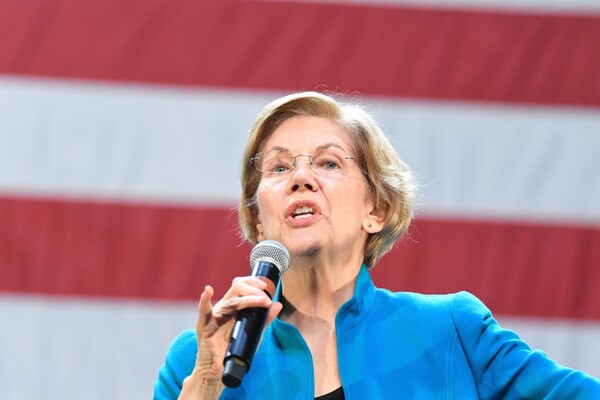
[DigitalToday Seung-a Yoo, intern reporter] U.S. Senator Elizabeth Warren (Elizabeth Warren), a Massachusetts Democrat, is expected to lead the Senate Banking Committee from the new session starting in January next year. She is expected to push easing cost-of-living burdens, export controls on advanced artificial intelligence (AI) semiconductors to China and regulation of prediction markets as key agenda items.
On Nov. 9 (local time), CNBC reported that a Senate Banking Committee aide to Warren laid out easing cost-of-living pressures, tougher AI semiconductor export controls to China and drafting rules for prediction markets as key policy directions for the next session. The aide spoke on condition of anonymity and described an agenda that has not been officially announced. Warren also signalled intensive oversight of technology company chief executives, administration officials and Wall Street executives, and urged them to preserve related documents.
Democrats won last week's midterm elections, securing control of major committees in both chambers of Congress. They can now set legislative agendas by committee and have the authority to summon government officials and corporate executives and require testimony under oath. The Senate Committee on Banking, Housing and Urban Affairs has jurisdiction over a broad range of areas including federal monetary policy, banking and export controls.
Warren's top priority is easing cost-of-living burdens. She plans to set caps on credit card interest rates and expand the supply of affordable housing through additional legislation following the existing "21st Century Housing Road to Housing Act". She is also pursuing measures to reduce burdens from medical expenses, consumer debt and student loans.
In the technology sector, she plans to tighten export restrictions on advanced AI semiconductors headed to China while also being involved in setting AI regulations in the United States.
Tougher oversight of prediction markets is also a major agenda item. Warren's side pointed to what it called a "Wild West-style" regulatory vacuum in the prediction market industry and said it would address it. Warren, together with Utah Republican Senator John Curtis (존 커티스), has already sent letters to Kalshi and Polymarket seeking information on safeguards for election-related prediction markets.
The Senate Banking Committee is expected to play a central role in Democrats' oversight efforts targeting private industry broadly. Warren's side said technology company chief executives, administration officials, people tied to the Trump family's cryptocurrency business and Wall Street executives should be prepared for the committee's questions and preserve relevant documents.
As a result, the next Senate Banking Committee is expected to be a stage dealing broadly not only with financial regulation but also AI semiconductor export controls, oversight of prediction markets and investigations into cryptocurrency businesses. With Democrats having secured control of the committee and subpoena power, attention is focused on whether Warren's policy plans will lead to actual legislation and corporate oversight.
 Seung-a Yoo
ysah@d-today.co.kr