
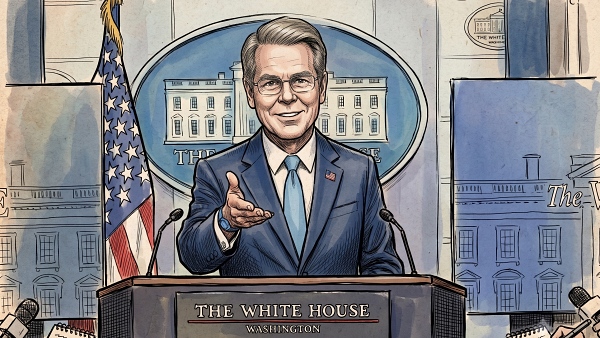
The U.S. Treasury has stressed the need to secure leadership in digital assets and said stablecoins could strengthen the dollar’s global standing.
On Oct. 28, blockchain outlet Bitcoin Magazine reported that U.S. Treasury Secretary Scott Bessent (스콧 베센트) called digital assets, artificial intelligence and semiconductors key areas of competition between the United States and China for leadership in core infrastructure at Ripple's Swell conference in New York.
Speaking alongside Ripple CEO Brad Garlinghouse, Bessent said the foundations that underpin the dollar’s dominance are changing. He said the United States maintains influence based on military power, but the importance of technological infrastructure will grow further in the future.
He pointed to stablecoins as a way to expand the dollar’s influence. Issuers of dollar-pegged stablecoins generally hold part of their reserves in U.S. Treasuries. Bessent said that structure could increase access to dollars for users in countries facing high inflation or currency instability.
Dollar-pegged stablecoins already account for an overwhelming share of the market. By CoinGecko figures, the share of dollar stablecoins is above 98 percent, with Tether's USDT and Circle's USDC taking the largest portions. It is clear the stablecoin market effectively revolves around the dollar.
The legislative environment remains unstable. The U.S. Office of the Comptroller of the Currency has finalised implementation rules for the Genius Act that set out requirements for payment stablecoin issuance, and a federal regulatory framework is set to take effect on Jan. 18, 2027. The Clarity Act, which addresses the broader structure of the digital asset market, was rejected 49 to 50 in a Senate procedural vote on Sept. 15.
The sticking points were crypto conflicts of interest for federal officials and provisions on stablecoin profits. During the process, the banking sector and the White House also clashed over the profit provisions.
Bessent expressed disappointment with the situation but said the Treasury could work with the Securities and Exchange Commission and the Commodity Futures Trading Commission to partially fill regulatory gaps. It was interpreted as a plan to strengthen coordination among regulators within existing authority even if congressional legislation is delayed.
He also referred to so-called debanking, in which banks cut off transactions with crypto firms. Bessent said best regulatory practices and safeguards could be 마련ed to prevent a recurrence, but he did not present a detailed execution plan, a dedicated organisation or a timeline. Administrative action can clarify rules within existing authority, but it has weaker durability than legislation and can be reversed by the next administration.
Next week’s U.S. midterm elections are also a variable. TD Cowen forecast that the midterms could further delay the Clarity bill. It said that while institutionalisation of digital assets centred on stablecoins is under way, the legislative vacuum covering the broader market structure could continue for some time.
 Yoonseo Lee
yslee@d-today.co.kr