
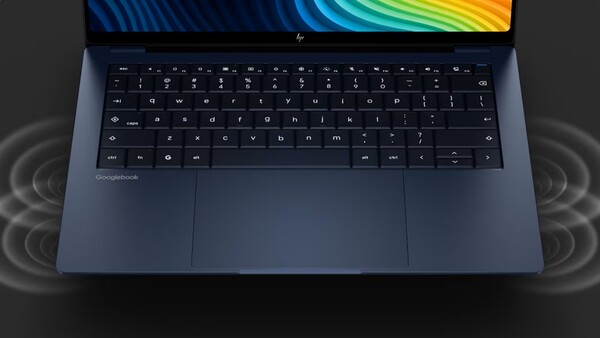
Google has launched Googlebook, a premium Android-based laptop, but assessments say the operating system and applications are not polished enough. Critics say the actual user experience is closer to a large smartphone than a laptop, despite high-end hardware.
According to IT outlet Ars Technica, Google introduced the Googlebook lineup in cooperation with manufacturers including Acer, Dell, Lenovo, HP and Asus. It features a touchscreen, a metal body and biometric authentication.
The Acer Googlebook 14 starts at $899 (about 1,195,700 won). A Lenovo model with an OLED display and a haptic trackpad costs $1,100 (about 1,463,000 won) or more. The HP Googlebook 14 is priced at about $1,300 (about 1,729,000 won).
The issue is the software. Assessments said the Googlebook operating system improves Android for a laptop environment but does not escape the limits of a mobile operating system.
It offers a desktop, split screen and multiple desktops, but its intuitiveness and usefulness fall short of macOS or Windows 11. Critics also pointed to a problem in which background apps close, forcing users to reload the screen they were working on.
The app ecosystem is also lacking. Major apps such as Slack and Photoshop keep smartphone-centric interfaces, and keyboard and mouse controls were inconvenient. Google Drive, Gmail and Calendar are provided as web apps, making it hard to expect the features of desktop-only programs.
Integration with Android smartphones also fell short of expectations. It supports file sharing, notification syncing and app mirroring, but connections frequently dropped or performance degraded.
AI features also disappointed. Magic Pointer, which sends on-screen content to Gemini, produced errors even on basic tasks such as adding a schedule. Users can create apps directly with the AI development tool Antigravity, but it required substantial editing work to improve completeness.
The outlet said, "Googlebook's hardware is excellent, but the software does not support it." It concluded that, for now, it lacks the competitiveness to replace macOS and Windows laptops.
 Jae-won Choi
ittt_0801@d-today.co.kr