
Prospects have emerged that the foldable phone market could reach a turning point for mainstream adoption after seven years of technical trial and error. Samsung Electronics, Huawei, Oppo, Honor and Google have improved issues including creases, durability, thickness and pricing. With Apple also joining the market, attention is on whether foldable phones can establish themselves as mainstream smartphones.
On Oct. 18, IT media outlet Engadget traced the market’s evolution from Royole’s FlexPai through products from major manufacturers including Samsung Electronics and Huawei to Apple’s foldable phone, and said foldable phones have overcome many of the limitations of early products.
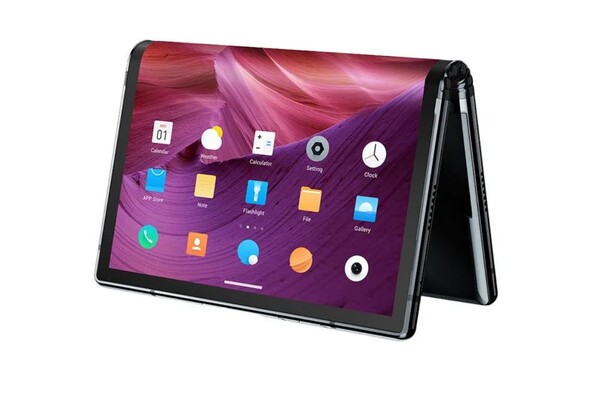
Foldable phones drew serious attention around 2019, but early products showed limitations in terms of completeness. Royole’s FlexPai, seen as the first commercial foldable phone, was significant for applying a flexible organic light-emitting diode (OLED) to a real product. On-site assessments at the time, however, pointed to a clunky design, awkward size and low level of finish.
Samsung Electronics’ Galaxy Fold, which it sought to launch the same year, also highlighted durability problems while showing technical potential. Concerns were raised that the screen could be easily damaged despite a price close to $2,000. The issue became more prominent when some users removed the screen’s protective layer after mistaking it for a screen protector. Samsung Electronics delayed the launch, recalled review units and revised the design. Even after the changes, durability of early foldable phones struggled to win full trust.
Huawei introduced a different foldable design with the Mate X. It folded outward, with a single display wrapping around the outside of the device. The design was highly rated, but the screen had limits in being vulnerable to scratches and impacts. U.S. technology sanctions against China also acted as an obstacle to market expansion. Huawei’s adoption of an inward-folding structure in the follow-up Mate X2 showed that external differentiation alone was not enough to solve durability issues.
From 2020 to 2025, efforts to improve real-world usability gathered pace. Samsung Electronics applied ultra-thin glass to the Galaxy Z Flip to increase rigidity of the inner screen. It also introduced IPX8-rated water resistance on the Galaxy Z Fold3 and Z Flip3 in 2021. Dust resistance was later improved. The Galaxy Z Fold6 supported an IP48 rating, and Google applied an IP68 rating to the Pixel 10 Pro Fold in 2025 to strengthen water and dust resistance.
Competition to reduce screen creases continued. Oppo introduced a design with less noticeable creases through the Find N in 2021, and Honor focused on reducing device thickness with its Magic V series. Samsung Electronics also responded by introducing the Galaxy Z Fold7 in a thinner design. As screens and hinge structures, durability and thickness improved together, foldable phones evolved from experimental early products into smartphones that can be used in everyday life.
Price barriers also eased gradually. With the emergence of clamshell models such as the Motorola Razr and the $999 Galaxy Z Flip3, foldable phones began to approach price levels that can compete with mainstream flagship smartphones rather than being limited to some ultra-high-priced products. Still, price gaps between models remain large, and prices higher than regular smartphones remain a task to solve for mainstream adoption.
Against this backdrop of technical evolution, Apple has also entered the foldable phone market. The iPhone Duo is passport-sized when folded and has a 7.6-inch internal display and a 5.4-inch external display. Its starting price is $1,999, targeting the premium market. Reviewers rated the iPhone Duo as the 'most interesting device in a decade' among Apple products.
Market research firm Counterpoint projected to Bloomberg that iPhone Duo sales in 2026 would reach 6 million units. If actual sales performance matches expectations, Apple’s entry could influence an expansion in foldable phone demand. Still, it remains to be seen how much the high price and a differentiated user experience compared with existing smartphones will draw consumers to buy.
Apple has repeatedly shown a strategy of entering a market after new technology, through early trial and error, secures a certain level of completeness. Foldable phones are also an area where various manufacturers, including Samsung Electronics, Huawei, Oppo, Honor and Google, have improved issues such as creases, durability, thickness and pricing. Apple’s participation is meaningful in that it can broaden the consumer base for foldable phones on the back of accumulated technological progress.
Ultimately, the evolution of foldable phones is closer to a result built up by manufacturers repeating failures and improvements over a long period than an achievement of any single company. It is still difficult to conclude whether Apple’s market entry will lead to actual mainstream adoption, but it is clear that foldable phones have moved beyond the early stage of technical experimentation and are emerging as competitive products in the mainstream smartphone market.
 Jinju Hong
hongjj@d-today.co.kr