
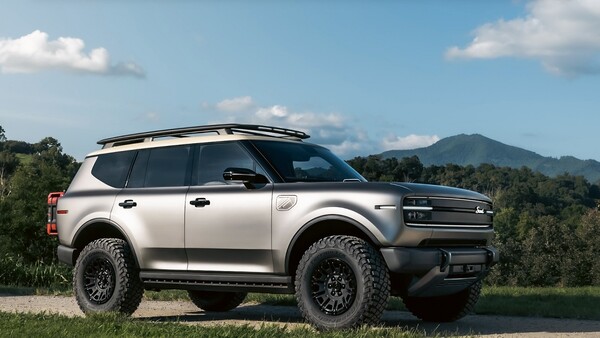
German automaker Volkswagen Group is naming the U.S. market as a key base for a rebound in performance and is moving to expand its sports utility vehicle (SUV) and pickup truck business. It aims to secure new growth drivers amid worsening profitability in China and high U.S. tariffs.
Cleantechnica reported on Oct. 18 that Volkswagen Group Chief Executive Oliver Blume (Oliver Blume) said at the Paris Automotive Summit that the United States is an important growth opportunity for the group and that it is making large investments. He added that the group sees the United States as a strategic market where it can expect stable profits and is also reviewing entry into SUV and pickup truck markets that emphasize off-road driving.
But the competitive environment is challenging. Volkswagen brand market share in the United States is about 3.2 percent, trailing Nissan and Subaru. The group is also facing an annual burden of about 5 billion euros (about 7.47 trillion won) due to U.S. tariffs.
Restructuring pressure is also rising at its German headquarters. Volkswagen Group has been reviewing the closure of 4 plants in Germany and job cuts of up to 100,000 people, but a final decision is uncertain due to union opposition.
The core of the U.S. expansion is the Scout brand. Volkswagen plans to produce SUVs and pickup trucks at a new plant in South Carolina, but is targeting customer deliveries in 2028. Audi is also seeking local U.S. production of high-margin SUVs.
Volkswagen is also reviewing a midsize pickup truck to compete with the Chevrolet Colorado, Ford Ranger and Toyota Tacoma. But intense competition and strong consumer loyalty to existing brands are obstacles.
Marco Schubert (Marco Schubert), who took charge of the North American business on Oct. 1, is pursuing efforts to improve profitability and overhaul sales strategy. In particular, it must also resolve distribution conflicts as existing dealers push back against Scout’s plan for direct-to-consumer sales.
Volkswagen’s relaunch in the United States is expected to hinge on developing new vehicles tailored to local consumer preferences, localizing production and adjusting its sales network.
 Jae-won Choi
ittt_0801@d-today.co.kr