
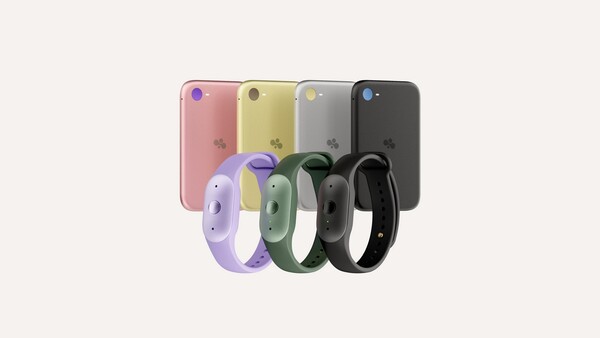
As AI wearable devices that listen to daily conversations and summarise them spread, controversy is growing in the United States over privacy violations and illegal interception. Critics say the act of analysing conversation content itself could violate some state laws even if no voice file is stored.
CNBC reported on Oct. 18 that major technology companies including Apple, Amazon and Meta are rolling out AI features that recognise nearby conversations and record and analyse them.
Amazon recently unveiled the AI wearable Bee Frontier and the smartphone attachable device Bee Eclipse. The two products convert conversations into text and summarise them for use in scheduling and alerts.
Apple also plans to add Siri Recap, which summarises conversations, and Live Rewind, which displays text from the previous 15 seconds of conversation, to the Apple Watch Series 12 it unveiled in September.
The issue is that private conversations could be collected without the consent of people nearby. Unlike existing voice assistants, new AI devices can interpret conversations and extract key information without storing the original audio.
Apple explained that it does not store voice data or transmit it to external servers. Amazon also said it does not keep original audio from the device and processes it in a secure environment.
Legal experts, however, say it is hard to judge legality based on whether data is stored. Colin Zick (콜린 지크), a privacy lawyer, said, "Continuously receiving conversations and turning them into written summaries could also qualify as interception under some state laws."
Daniel Pi (Daniel Pi), a professor at the University of New Hampshire School of Law, warned, "If these functions are used without the consent of all parties to the conversation, civil and criminal liability could arise." He added that the likelihood of actual prosecution would be low.
Another issue is that legal liability could fall on the device wearer rather than the manufacturer. That is because even people nearby who are not using the device could become targets of conversation analysis regardless of their wishes.
As AI wearables become more convenient, legal debate is expected to intensify over personal data protection and consent standards among parties to a conversation.
 Choi Jae-won
ittt_0801@d-today.co.kr