
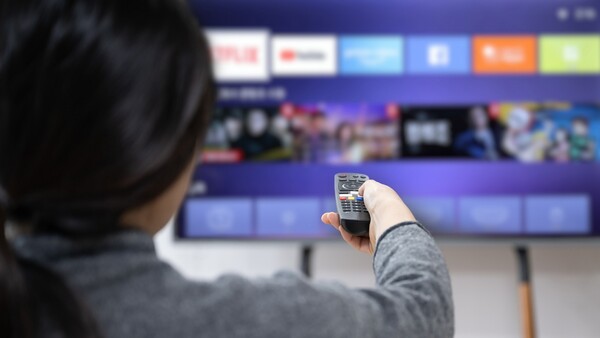
The British government is considering imposing the BBC licence fee on users of online streaming services such as Netflix, Disney+ and YouTube. The plan would expand collections to households that do not watch traditional TV broadcasts, in a bid to ease the BBC's financial difficulties.
TechRadar, an IT media outlet, reported on Oct. 17 that the British government is expected to include plans to overhaul the licence fee system in a policy proposal on renewing the BBC's Royal Charter that it plans to announce before Christmas.
Britain's annual TV licence fee is 180 pounds. Households must pay the fee if they watch live TV broadcasts or use BBC iPlayer. Households that watch only on-demand content on services such as Netflix are excluded.
The government sees the current system as failing to reflect viewing habits that have shifted online. If the overhaul is implemented, households using streaming services such as Netflix or YouTube could be charged the licence fee even if they do not watch BBC content.
The backdrop is a weakening base of BBC licence fee income. As of the end of March, the number of valid TV licences fell by 539,000 from a year earlier to 23.3 million. The decline over the past 5 years totals about 2 million.
The BBC said its existing funding model is outdated and has called for changes to ensure stable operation as a public broadcaster. Additional funding could be used not only for programme production but also to support local media and respond to misinformation.
The prospect of higher costs for viewers and the collection method are controversial. Richard Broughton (리처드 브로턴), a director at Ampere Analysis, pointed out that expanding the licence fee could curb household spending on paid services. He also said that enforcing collection could raise issues around streaming companies providing subscriber information.
Whether the fee will be raised and the specific scope of application have not been decided. The British government plans to draw up a final plan while considering the BBC's financial stability, the independence of public broadcasting and the burden on viewers.
 Choi Jae-won
ittt_0801@d-today.co.kr