
[Maui, United States = Digital Today reporter Seok Dae-geon] The spread of agentic AI appears set to accelerate further. After trying an agentic AI PC built into a laptop and glasses, it has reached a level where it handles real tasks such as document writing and photo editing on behalf of users.
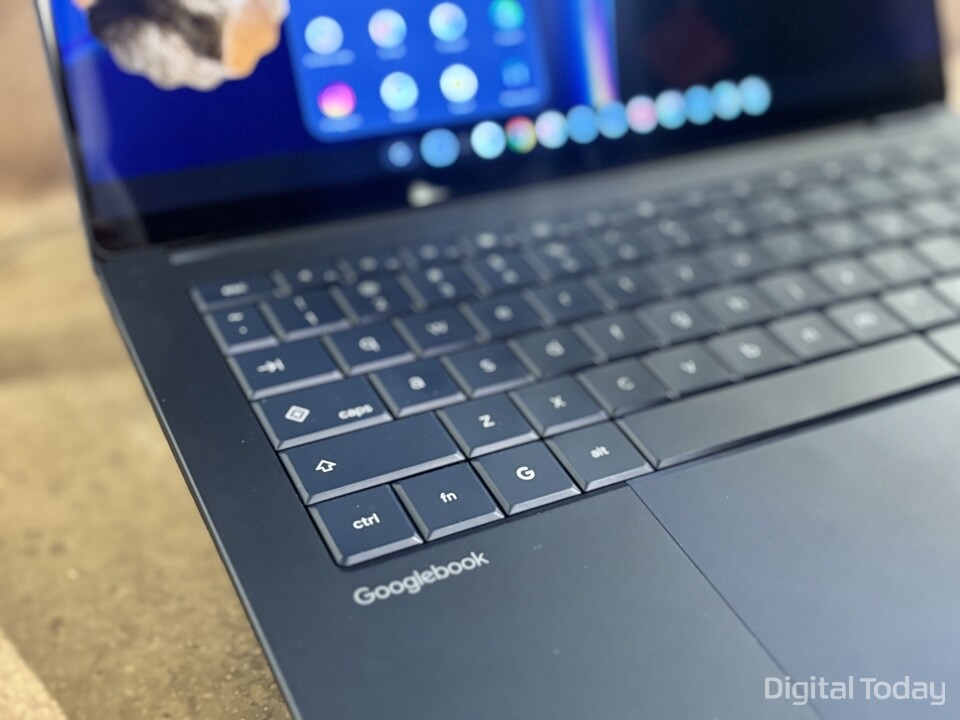
After trying Google Book in a demo room at Snapdragon Summit 2026 held in Maui, Hawaii, from Sept. 22 to 24 local time, Google Book opened apps and photos from a smartphone placed next to it directly on the laptop without going through the cloud. On XR glasses, Gemini guided how to edit photos. Work moved across devices without installation or file transfers. Agentic AI seemed to have reached a level where it can be deployed immediately in practical work.
At the Google Book booth, an HP Google Book was connected to a Samsung smartphone. When 'Cast My Apps' was launched on Google Book, Samsung Calendar installed on the smartphone opened on the laptop without being installed separately. The feature lets users use smartphone apps linked to the same Google account directly on the laptop.
Using 'Quick Access' in the Google Book file app, it accessed the entire smartphone file system and copied photos taken on the phone immediately without cloud syncing or messaging. The two devices communicate peer-to-peer within the same Wi-Fi network and do not route file transfers through the cloud. At launch, it will not support Wi-Fi Direct, so outside users must connect both devices to the same hotspot.
There was also a handoff feature. Gmail that had been used on the smartphone reopened on Google Book to the same mail composition screen when the user pressed a notification shown on the laptop. This feature, called 'Continue On', is open so it can link both Google apps and third-party apps. Users can reply to message notifications received on the smartphone directly from the laptop, and clearing a notification on the laptop also clears it on the smartphone.
The Google Book screen also moved to XREAL Aura glasses. With the glasses on and the Google Book screen displayed in front of the eyes, pressing and holding the home button launched Gemini, and pressing it once returned to the home screen. With an Adobe Lightroom workspace on screen, when asked how to erase a specific object in a photo, Gemini provided guidance based on what was shown on the screen.
It is a way to use XR glasses, in addition to an external display, as an AI interface combined with Gemini. XREAL Aura can run on its own. A separate compute device connected in the demo was configured to show a scene using it as an external display for Google Book. The base product price is expected to be below $1,500.
There was also a device that handled tasks on its own without connecting to a smartphone or laptop. Specs operated with only the glasses and without connecting external devices. Of its two Snapdragon processors, one is responsible for computer vision and hand tracking, and the other runs applications. It runs a browser and YouTube, recognizes real objects with a camera and places digital content in physical space. In a tutorial, when a hand was extended, a virtual crystal was grabbed, and a 'Palm Menu' that appeared on the palm allowed entry to the home screen. Full-color displays were applied to both eyes.
On the AI PC Qwen Book, which uses the operating system as the execution base for AI agents, the agent wrote a proposal and even created an email draft before asking the user for final confirmation. The email was sent only after the user reviewed and approved the draft. The agent continues work even when the laptop is closed or in standby mode, and users can check progress through a dedicated mobile app. The execution steps and decision details remain on screen so they can be traced.
Partners also presented release schedules. XREAL Aura is scheduled for release in fall 2026. Specs is currently taking preorders and plans to ship within months, priced at $2,195. Qwen Book was exhibited outside China for the first time at this event shortly after its initial unveiling in China, and is targeting commercialization by the end of 2026.
 Seok Dae-geon
d2dg@d-today.co.kr
Seok Dae-geon
d2dg@d-today.co.kr