
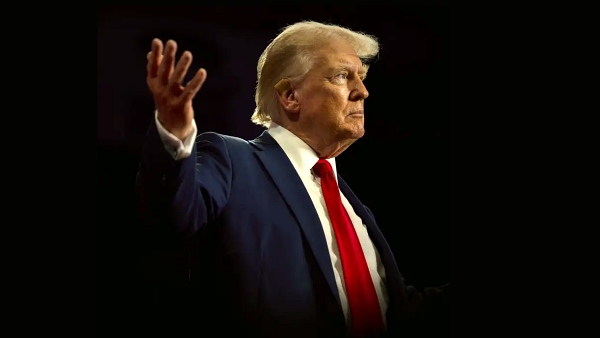
Opposition is growing among some conservative activists and Republican figures to U.S. President Donald Trump’s drive to minimise AI regulation. The White House, which says AI development speed must be maintained, is clashing with parts of the conservative camp that worry about the safety and cybersecurity risks of advanced models.
On Sept. 25 (all dates local time), Cryptopolitan reported Trump has repeatedly stressed that additional AI regulation could slow industry development and competition with China. On Sept. 14 he claimed, "The guardrails AI needs are a strong and wise president." Then on Sept. 21 he also suggested existing enforcement tools could be used, saying government agencies such as the Justice Department could control AI if necessary.
Amid this, opposition moves have already appeared within conservative ranks. In May, about 60 Trump supporters and conservative activists, including Steve Bannon, delivered a letter to the White House calling for a process under which the government tests and approves the most powerful AI models before they are released. They cited the possibility that advanced AI could be misused for cyberattacks or threats to national security as key risks.
Local conflicts over the expansion of AI data centres are also a factor. Texas Governor Greg Abbott ordered a halt to permits related to data centres to review effects on the power grid and water resources. Texas’ power grid has received data-centre connection requests exceeding 474 GW, more than 5 times the state’s record peak power demand. Florida Governor Ron DeSantis is also calling for stronger separate regulation of AI and data centres.
In West Virginia, residents continue to object to a $4 billion data centre plan over noise, water resources and local tax revenue. As disputes overlap over AI industry growth, power and environmental burdens, and the safety of advanced models, the issue of U.S. AI regulation is emerging as a new policy flashpoint within the Republican Party.
 Choi Jae-won
ittt_0801@d-today.co.kr
Choi Jae-won
ittt_0801@d-today.co.kr