
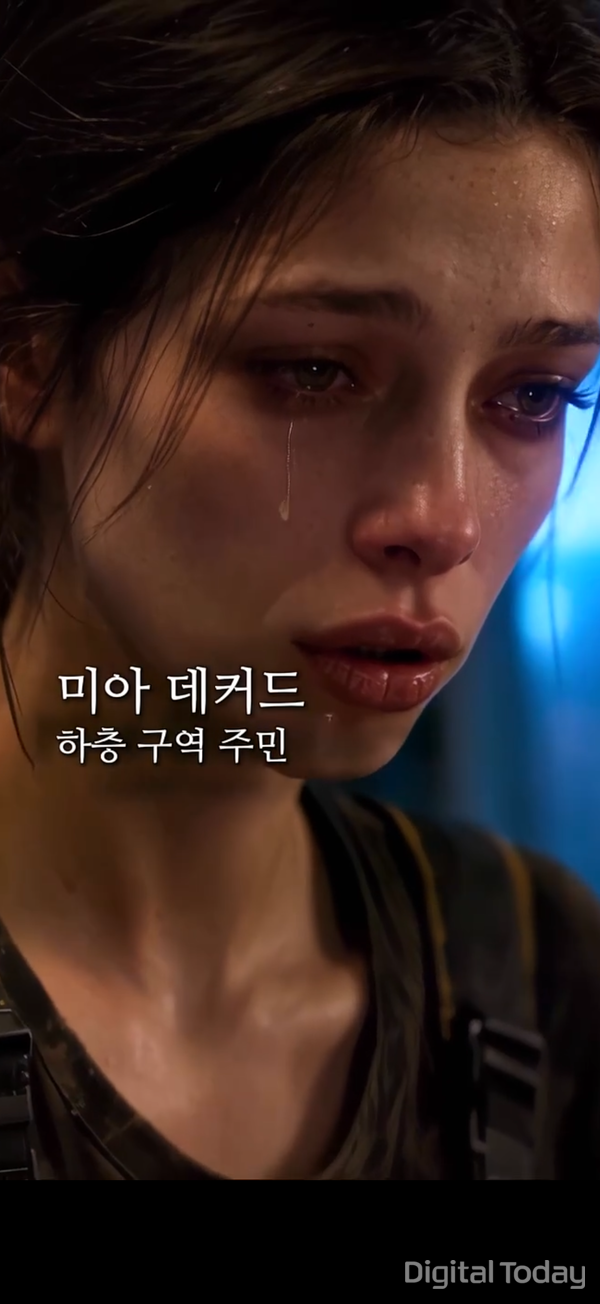
Short dramas of about 1 to 3 minutes an episode are emerging as a new rival to online video services. Global short-drama platform ReelShort has already surpassed major OTT services such as Netflix and Disney+ in mobile viewing time.
Omdia, analysing Sensor Tower data, found ReelShort's average daily mobile use time in the second quarter was about 38 minutes, up 40 percent from the previous quarter. That was longer than Netflix, Amazon Prime Video and Disney+.
Total time spent on short-drama apps is also rapidly closing in on traditional OTT services. As of April, average daily use time for global short-drama apps was 25 minutes, up 85 percent from January last year. Over the same period, OTT viewing time was about 35 minutes, narrowing the gap to 10 minutes.
Short dramas are typically serials made by linking dozens of short episodes of about 1 to 3 minutes. They are produced in a vertical format optimised for smartphones and use cliffhangers with twists and conflict in each brief episode to prompt viewers to watch the next instalment.
The market is also expanding quickly, driven by short running times and viewing patterns optimised for mobile. Global short-drama market revenue is forecast to grow about 27 percent to $14 billion this year from $11 billion last year, Omdia said.
Mobile payments are also rising. Global in-app purchase revenue for short-drama apps in the first quarter was about $750 million, up 20 percent from a year earlier, Sensor Tower said.
◆ Made cheaply and in volume with AI... China ramps up short-drama output
Short dramas are rapidly increasing the volume of content supplied, supported by low production costs and short production periods. In some cases, the total production cost of an entire series is only a fraction of the cost of producing a single episode of a regular TV drama.
According to Reuters and other foreign media, production costs per series in the U.S. short-drama industry are about $100,000 to $300,000. With 45 seconds to 2 minutes per episode and 50 to 75 episodes in total, overall running time is about 40 to 150 minutes. By contrast, a typical 30-minute TV sitcom costs $2 million to $4 million to produce a single episode.
The adoption of generative AI is further cutting costs and production time. AI is used across the process, from scriptwriting to image and video generation, translation and dubbing.
China's National Radio and Television Administration said about 430,000 short dramas were released in China from January to August this year, 13 times last year's full-year total. More than 90 percent were produced using AI technology.
Monetisation is also more aggressive than OTT services that rely on monthly subscriptions. Platforms offer early episodes for free, then require users to watch ads or buy coins to unlock the next episodes. They also sell separate weekly subscriptions, but at prices several times higher than regular OTT monthly fees. In South Korea's app store, ReelShort's weekly subscription costs 22,000 won to 29,000 won and one-off coin products are sold from 7,700 won to 33,000 won. NetShort's weekly VIP fee is also about 19,000 won to 33,000 won.
◆ Concerns over addiction and 'AI slop'... OTT services also respond with vertical video
Concerns are also growing over user protection and content quality alongside rapid growth. The structure combining short episodes and repeated payments can encourage addiction and overspending.
It also raises content quality and rights issues. So-called "AI slop" could proliferate, repeating similar stories and scenes or lacking polish, and concerns are being raised over copyright infringement and actors' portrait and voice rights.
The Chinese government has specified such side effects as targets for regulation. The "Microdrama (Short Drama) Development and Management Measures", which took effect on the 1st of this month, require regular review and evaluation of platform algorithms and ban algorithm models that induce user addiction or excessive spending. Paid content must also clearly disclose charging information.
Content controls are also being tightened. China's National Radio and Television Administration deleted 68,000 short dramas and sanctioned about 1,200 accounts this year for harmful or vulgar content, content inappropriate for children, and copyright infringement. More than 90 percent of the sanctioned content was AI-produced.
As short dramas rapidly increase viewing time, existing OTT services such as Netflix and Tving are also strengthening vertical video features targeting mobile users. Netflix introduced a vertical video feed called "Clips" on its South Korean mobile app in July. Tving is also providing vertical videos of highlights from original series, variety shows and sports in a separate "Shorts" tab.
But unlike existing OTT services that use vertical videos as a supplementary tool to drive viewers to full-length content, short dramas are designed from the outset for continuous viewing of short episodes in a mobile environment. As viewing time for Chinese short-drama platforms rises quickly, competition with existing OTT services for mobile viewing time is expected to be unavoidable.
An OTT industry official said, "For OTT operators, it is ultimately important to maintain subscriptions by increasing users' time spent and revisit rate, and if short dramas draw repeated visits and continuous viewing, they can be a sufficient threat." The official added, "If overseas short-drama platforms are not subject to the same level of regulation as domestic operators, reverse discrimination issues could arise in content and charging competition."
 Seulgi Son
sageson@d-today.co.kr
Seulgi Son
sageson@d-today.co.kr