
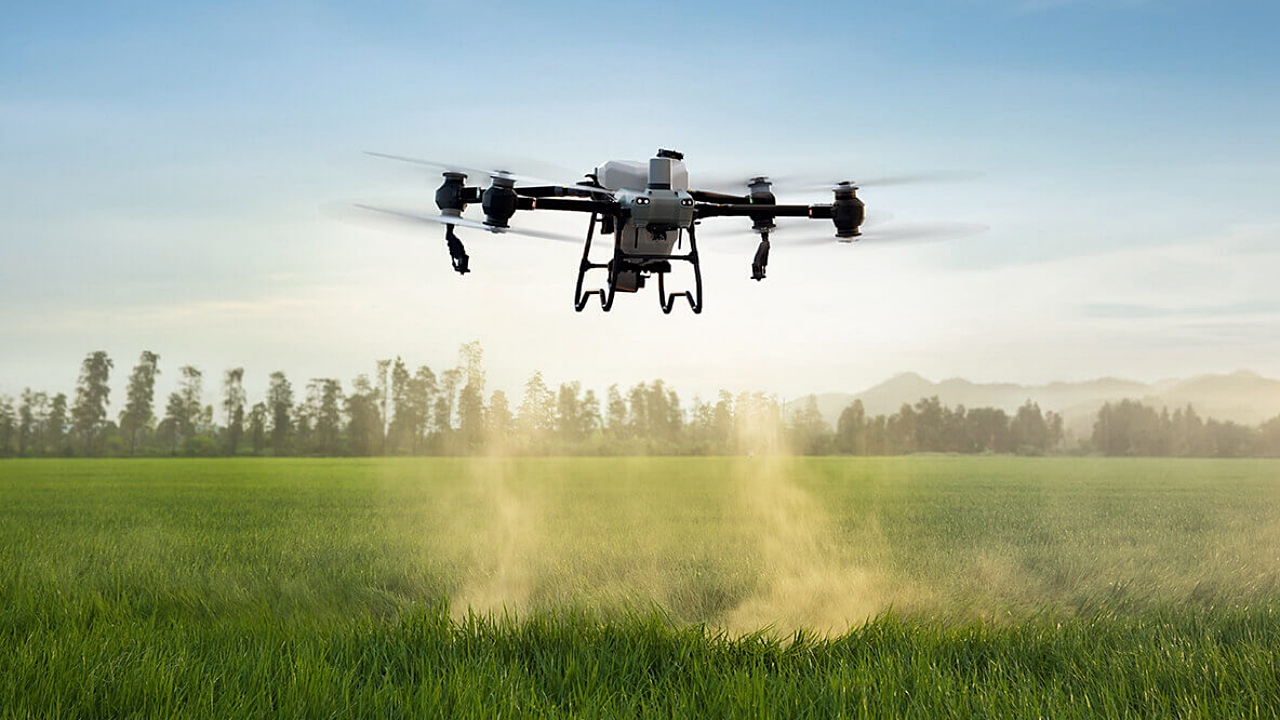
China's agricultural drone workload is about 30 times that of the United States, data showed. Cleantechnica reported on Sept. 20 that China operated about 309,000 crop-protection drones as of early 2026 and carried out about 203 million hectares of treatment work in 2025.
Hectares treated refers to workload, not actual farmland area. If the same field is treated three times, it is counted as 3 hectares treated. With a large operating base already in place, China added about 58,000 aircraft and 25 million hectares of annual workload in a year. In 2024, about 251,000 agricultural drones carried out 178 million hectares of treatment work.
The United States is following the same technological trend, but the scale gap is large. A 2025 industry survey by the American Spray Drone Coalition estimated annual workload by approved Part 137 operators at about 16.4 million acres. That equals about 6.64 million hectares treated. The different counting methods make a precise one-to-one comparison difficult, but the overall gap was put at about 30-fold.
Farmland area did not explain the difference. Cultivated land used for comparison was similar, at about 128 million hectares in China and about 133 million hectares in the United States. Even so, Chinese drones carried out far more work per hectare of farmland.
By growth rate alone, the U.S. market may appear to be catching up quickly. But the absolute increase was far larger in China. China increased its annual workload by nearly 25 million hectares treated in 2025 alone, a multiple of the estimated size of the entire U.S. crop-protection drone market.
The U.S. growth also shows that agricultural drones are not equipment suited only to China's small plots or rice paddies. The United States has a mechanised farming system built around large tractors, self-propelled sprayers and a developed manned agricultural aviation industry. Even so, the rapid rise in drone treatment work means drones are meeting real demand in other farming environments as well.
Europe shows a similar pattern. Chinese-made agricultural drones are available in several European markets, but the scale of adoption differs sharply from China. That means access to equipment alone does not create a large-scale operating industry, and that regulation, contracts, maintenance and farming operating systems must be in place together.
In the end, the key is the operating system, not the aircraft. China has entered a stage where drones are established as practical farm equipment, and replacing ageing aircraft, improving new equipment performance and refining operations through repeated work have become more important tasks.
 Hyunwoo Choo
cookinpapa@d-today.co.kr
Hyunwoo Choo
cookinpapa@d-today.co.kr