
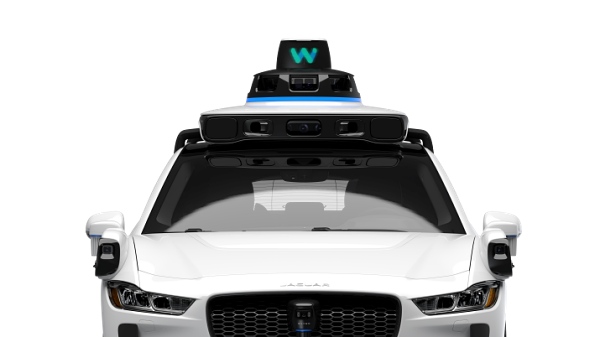
The U.S. National Highway Traffic Safety Administration (NHTSA) has begun developing federal-level performance standards to assess the safety of self-driving cars. It judged that common benchmarks are needed to evaluate how safely autonomous-driving technology operates on real roads.
On Sept. 20, TechCrunch reported that NHTSA and SAE International launched a consortium called ASCEND to accelerate development of data-based performance standards for autonomous-driving systems.
There is currently no common safety evaluation framework for autonomous-driving systems comparable to a human driver's licensing test. Companies seeking to apply the technology to robo-taxis, autonomous trucks and future personal autonomous vehicles have mainly relied on demonstrating safety using real-world driving data.
NHTSA believes existing Federal Motor Vehicle Safety Standards (FMVSS) alone make it difficult to sufficiently address new forms of self-driving vehicles. Because the current standards assume a conventional passenger car design, it is hard to apply them as-is to vehicles such as Tesla's Cybercab or Zoox's robo-taxi that lack a steering wheel, pedals, side mirrors and rearview mirrors.
Jonathan Morrison (조너선 모리슨), NHTSA's chief counsel, called evaluation of autonomous-driving system capabilities ASCEND's top priority at the AI Horizons Summit in Pittsburgh. He said standards for autonomous-driving performance could later be reflected in federal motor vehicle safety standards, helping establish a federal-level regulatory foundation for autonomous driving.
The direction of the standards is a balance between safety and innovation. Morrison said NHTSA aims for a regulatory system that keeps safety at the center of policy without overly restricting technological innovation.
He also indicated it would avoid adding rules after the fact each time a specific accident or problem occurs, or regulating based on a predetermined view of the direction of technological development. That means setting standards that can measure the capabilities of autonomous-driving systems based on real-world driving data.
A federal common standard is also expected to reduce the spread of differing autonomous-vehicle requirements by states and local governments. In the United States, regulatory environments differ by state for autonomous-vehicle testing and commercial services, creating a burden for companies to respond to separate rules in each area.
Morrison said the aim is to reduce the problem of state and local requirements expanding in overly divergent ways by establishing capability standards, while supporting both innovation in the United States and safe adoption of autonomous-driving technology.
Specific timelines and evaluation methods have not yet been disclosed. Industry discussions are expected to continue over which driving data to assess, how to measure accident-avoidance capabilities and perception and decision-making abilities, and what level of standards to apply to commercial services.
In the autonomous-driving industry, moves to expand businesses are also continuing alongside efforts to set regulatory standards. May Mobility said it plans to go public through a merger with a special purpose acquisition company, ACP Holdings Acquisition. If the deal is completed, it could raise more than $300 million and be valued at about $1.4 billion.
May Mobility currently operates autonomous Toyota Sienna vehicles in 3 areas in the United States, and laid out a plan to become the first listed company in the United States to focus on autonomous ride-hailing services.
Robo-taxi business expansion is also continuing. Waymo resumed robo-taxi service in San Antonio, Texas, about 5 months after a vehicle was swept away by a flash flood. It launched a new robo-taxi service in Las Vegas, and disclosed plans to begin map building and test driving in Singapore.
Amazon-owned Zoox is also limited to 100 commercial robo-taxi vehicles in Las Vegas, but the limit is set to expire on Sept. 25, prompting talk of a possible service expansion.
Cooperation between automakers and autonomous-driving technology companies is also on the rise. Lucid Motors is working with European mobility platform Bolt on a plan to deploy at least 25,000 fully autonomous vehicles. The vehicles aim for a smaller and cheaper structure than existing models, based on a midsize electric vehicle platform Lucid is developing.
Ultimately, the U.S. autonomous-driving industry is entering a new stage of establishing common safety standards beyond technology development and service expansion. If federal performance standards lead to actual rules, they are expected to affect how self-driving vehicles are designed and tested, as well as expansion of robo-taxi services and responses to state-by-state regulation.
 Jinju Hong
hongjj@d-today.co.kr
Jinju Hong
hongjj@d-today.co.kr