
[Digital Today reporter Seung-a Yoo] Brett Adcock (브렛 애드콕), founder and CEO of Figure AI, said of humanoid robot development: "We are creating a new species."
On Sept. 20 (local time), IT outlet TechRadar reported that Adcock, speaking on stage at Salesforce's annual Dreamforce event, said the ultimate goal of humanoid robots is not simply to build a new type of machine but to create a new order of intelligence.
The remarks came after Salesforce CEO Marc Benioff (마크 베니오프) asked, "Are we not building robots but creating a new species?" Adcock agreed and repeated the phrase, "We are creating a new species." It shows a vision to develop humanoid robots into beings with a new form of intelligence rather than simple industrial automation machines.
Still, it is difficult to say current humanoid robots have reached a level where they can fully replace people in real environments. Even today's most advanced humanoid robots have been seen failing at tasks such as assisting with housework or exercise. Researchers, by contrast, expect the performance of artificial intelligence (AI) installed in robots and their ability to understand the physical world to improve significantly over time.
Figure AI has drawn attention with promotional videos using prototype humanoids. The videos mainly show tasks that can be performed at home, such as tidying a bedroom or loading dishes into a dishwasher. Such demonstrations, however, are limited in that they take place in controlled environments.
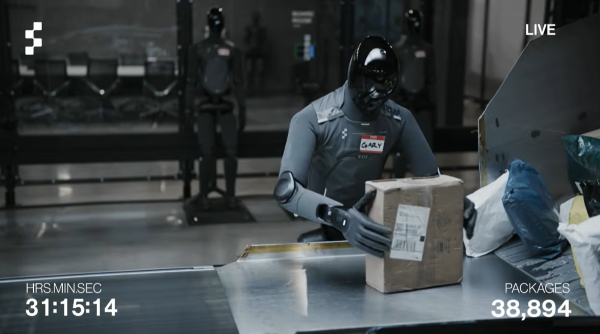
Figure AI has also conducted demonstrations aimed at real work environments. Figure 03 humanoid robots sorted more than 100,000 parcels via livestream in May 2026. Figure AI said the robots used its in-house AI system, Helix-02, to carry out the work without human remote control. The livestream was originally planned as an eight-hour demonstration but later continued for more than 80 hours, processing more than 100,000 parcels.
But such demonstrations alone make it difficult to conclude that humanoid robots can operate reliably in everyday real environments. In real settings, unpredictable situations occur constantly. Even if commercialisation of humanoid robots accelerates, verifying adaptability and stability across varied environments remains a task.
Against this backdrop, several companies have announced plans to start mass production of humanoid robots around 2026 and 2027. They are expected to be deployed initially at industrial sites such as factories and logistics facilities, but manufacturers are also targeting the home market over the long term.
Ultimately, the key for the humanoid robot market is whether mass-production plans can translate into actual shipments and on-site deployment, and whether robots can operate reliably in unpredictable everyday environments beyond controlled demonstrations. For Figure AI's vision of a new species to be realised, not only AI intelligence but also the ability to understand and respond to physical environments must advance together.
 Seung-a Yoo
ysah@d-today.co.kr
Seung-a Yoo
ysah@d-today.co.kr