
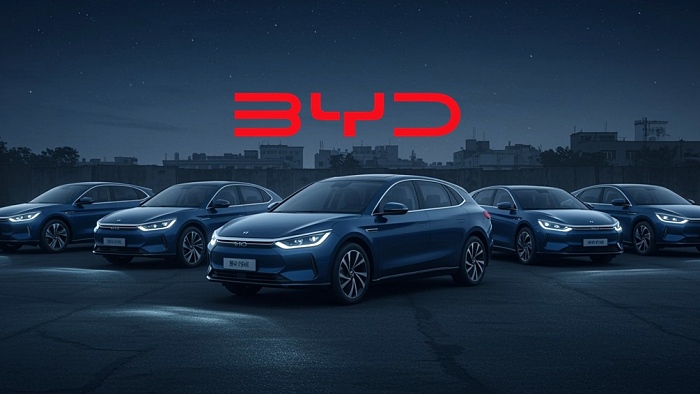
BYD is pursuing a plan to have 3 vehicle assembly plants and 1 battery plant in Europe.
On Sept. 18 (local time), electric vehicle outlet Cleantechnica reported that BYD is accelerating efforts to build local production bases to respond to the European Union's high tariffs on China-made electric vehicles and to expand sales in Europe.
The core of the current plan is 3 vehicle plants and 1 battery plant. BYD has entered the stage of starting production at its first European plant in Hungary, and it plans to decide on a second manufacturing site by year-end. Alfredo Altavilla said at a presentation in Turin, Italy, on Sept. 17 that BYD is starting production at its first European plant and is expected to decide on a second manufacturing site by the end of this year.
For the second base, it is more likely to acquire and renovate an existing facility rather than build a factory from scratch on a new site. Altavilla said it is considering buying existing equipment and refurbishing it, and mentioned Spain and France as preferred regions. This raised the likelihood that BYD's expansion of European production will unfold in a way that considers both speed and cost.
The plan is tied to BYD's overseas expansion strategy. BYD is focusing on rapidly increasing sales outside China. The outlet pointed to global expansion and growth in overseas sales as BYD's biggest current tasks. It cited as background that competition is not yet intense in several markets in Asia, South America, North America and Africa, enabling it to speed up the pace of acquiring new customers.
Europe is different. Competition is already intense, but the new-car market is large and the shift to electric vehicles is still under way. Cleantechnica reported that the share of electric vehicles does not exceed 50 percent in most European markets. For BYD, it is a large market with room for growth. Local production is therefore seen as a key means to speed market entry while avoiding tariff barriers, beyond simply building new plants.
European production also has significance for the supply chain. The plan to pursue 1 battery plant alongside 3 vehicle assembly plants shows a direction aimed at expanding local footing not only for vehicle sales but also for components and core batteries. However, the specific location and timeline for the battery plant have not yet been presented.
What has been confirmed so far remains at the level of a long-term plan, and the pace and scale of actual implementation could change depending on European sales performance and local business conditions. Even so, BYD's European localisation strategy is becoming more concrete as the sequence continues of starting up the Hungary plant, deciding on a second site within the year and reviewing Spain and France.
Key points to watch will be the confirmation of the second plant's location and whether the remaining production bases are fleshed out. How quickly BYD builds a local production system in the European market is expected to gauge the execution power of its sales expansion strategy.
 Jinju Hong
hongjj@d-today.co.kr
Jinju Hong
hongjj@d-today.co.kr