
[Digital Today reporter Lee Ho-jung (이호정)] Naver is shifting its shopping search results from a fixed list of products to an approach that changes composition based on user response. After adjusting in real time the placement and number of products and ads, and bundling price comparison and Naver Plus Store into a single shopping area, it is now testing varying how many products to show in search results.
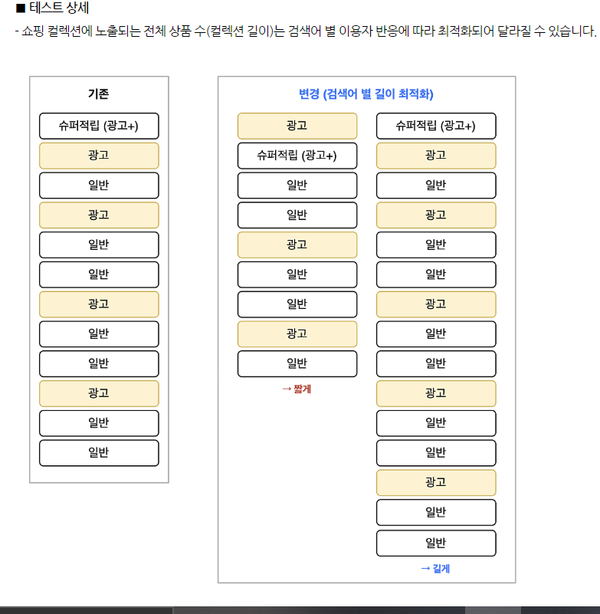
Naver Advertiser Center said on Thursday that Naver will run a test from the previous day through Sept. 24 to optimise the total number of products in shopping collections for some mobile integrated search traffic.
In the test, the total number of products displayed in a shopping collection, or the "collection length", may vary depending on user response by search term. If it previously adjusted how many products and ads to place and where, it is now expanding optimisation to the number of products shown at once.
◆Step-by-step overhaul from product and ad placement to shopping screens
Naver's shopping search overhaul has been rolling out in stages since last month.
Starting Aug. 13, it applied a method to optimise in real time the exposure composition of shopping search ads and ADVoost Shopping for shopping-related queries in mobile integrated search. Rather than fixing the placement and number of ad, general and super-rewards products, it adjusts them to reflect user response by search term and other factors.
Naver said earlier tests showed positive effects in improving ad efficiency.
From Sept. 3, it integrated the separately displayed "price comparison" and "Naver Plus Store" into a single shopping collection for some mobile integrated search queries. It also introduced a related product recommendation area and a new ad area showing brand stores and high-rated review products.
On Sept. 8, it provided additional guidance on Trend View UI improvements, including adding colour chips to product cards and changing the UI for review, purchase and wish-list counts and the way prices are displayed.
From Sept. 10, Naver expanded the dynamic exposure method to PC integrated search and Naver Shopping on mobile and PC. In those areas as well, the placement and number of ad, general and super-rewards products may vary depending on user response and other factors.
From Sept. 17, it has gone a step further by testing whether the length of the shopping collection itself also varies depending on response by search term.
◆Why change...Strengthening the flow from search to purchase
The background to Naver's step-by-step changes to its shopping search structure is interpreted as an aim to connect product browsing that starts with search to actual purchases.
By bundling price comparison and Naver Plus Store and adjusting product and ad placement based on user response, users can find what they want faster while increasing the likelihood they will continue browsing and buying within Naver.
This direction is also seen in its AI shopping agent. Naver said the previous day that it upgraded functions so the AI shopping agent recommends products by reflecting real-time delivery information, including order cut-off times and actual arrival dates. As of September, the number of conversations rose about 60 percent from June, after the official launch, and transaction value increased 82 percent.
The advertising side is similar. As Naver said it confirmed improved ad efficiency in earlier tests, the structure of finding in real time product and ad placements that draw strong user response can be seen as an attempt to raise both search satisfaction and ad performance.
The shopping search overhaul and the upgraded AI shopping agent show that Naver is placing more weight on cutting product browsing time and linking to actual purchases than on simply increasing exposure.
But the criteria Naver has outlined for shopping search at present are closer to exposure optimisation reflecting user response by search term rather than personalised recommendations by individual.
An industry official said, "In shopping search, what matters is not showing many products, but how quickly users can find products that meet the conditions they want and carry through to purchase." The official said, "Naver adjusting both its search and recommendation structures can also be seen as a flow aimed at reducing users' browsing time and raising transaction conversion."
 Lee Ho-jung
lhj@d-today.co.kr
Lee Ho-jung
lhj@d-today.co.kr