
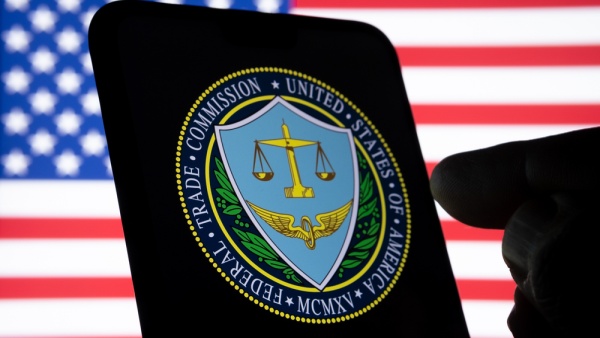
[DigitalToday reporter Jinju Hong] Former U.S. Federal Trade Commission (FTC) chair Lina Khan (리나 칸) argued that cracking down on AI companies does not require waiting for a separate new legal framework and that regulation is possible under existing consumer protection and competition laws.
On Sept. 16 (local time), online media outlet Gigazine reported that Khan said releasing unverified AI models or AI agents to the market could be subject to sanctions under current law.
Khan said providing services without appropriate measures to detect and block faulty or defective AI agents could amount to an “unfair or deceptive act” prohibited by the FTC Act and similar state laws. She also mentioned that some state attorneys general have begun reviewing whether companies or chief executives can be held criminally liable when AI models are implicated in criminal acts.
The core issue is enforcement of existing laws rather than new regulatory legislation. Khan drew a line by saying AI is a new technology but cannot be an exception to existing regulation. She has previously written in a New York Times op-ed, “AI is a novel tool, but that does not exclude the application of existing laws,” adding that “the FTC will strictly enforce the laws it must enforce in new markets as well.”
She also raised concerns from the perspective of competition law. Khan said if AI companies improperly obtain sensitive information through methods such as tracking customers’ use of tools, it could be seen as an “unfair method of competition” prohibited under current law. She argued that beyond simple safety controversy, data collection methods and market dominance issues can also be addressed within the existing regulatory framework.
Khan also cited OpenAI accountability as an example. She said OpenAI could face legal liability in connection with the Hugging Face hacking incident that occurred in July 2026. She added that since reports emerged that Nvidia agreed to a Hugging Face acquisition deal in August 2026, it is unlikely that Hugging Face, which is entering Nvidia in pursuit of further progress by OpenAI, would actually pursue litigation.
Khan has also clarified the FTC’s role as the race to commercialise AI accelerates during her tenure. She wrote at the time, “We are closely examining how best to carry out our two missions of promoting fair competition and protecting the American people from unfair or deceptive acts.” She added, “We will never tolerate business models or practices that exploit users at scale.”
Market reaction was mixed. Online, there was criticism that companies such as OpenAI and Anthropic treat product defects or so-called runaway problems as if they were external responsibility. A user named Hunter argued that if such companies cannot guarantee the safety of their products while earning huge profits, they should not release products until a solution emerges.
The remarks are drawing attention as they shift the focus of AI regulation debate from the need for new legislation to the feasibility of enforcing existing laws. How U.S. regulators and state governments will link consumer harm, criminal involvement and sensitive information collection issues to specific legal provisions and move to enforcement is expected to be closely watched.
 Jinju Hong
hongjj@d-today.co.kr
Jinju Hong
hongjj@d-today.co.kr