
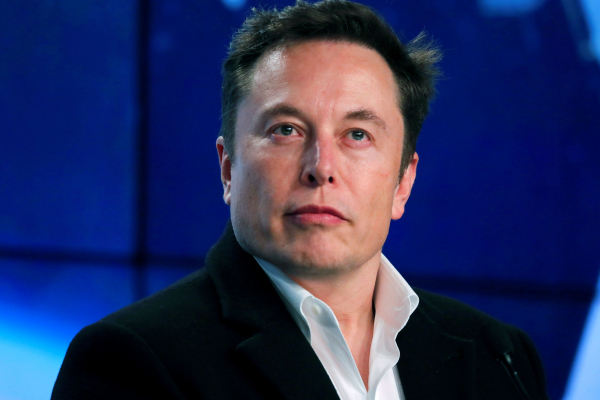
Elon Musk proposed that major artificial intelligence companies create a mutual verification system to review each other’s models before unveiling new ones.
On Sept. 15, CNBC reported that Musk said at the All-In Summit in Los Angeles that SpaceX, OpenAI, Anthropic, Google, Meta and three to four leading Chinese AI companies should take part in mutual verification.
Musk’s approach would have competitors use a common testing framework to check safety, rather than each company assessing its own model. He argued that if competitors find issues that could raise concern, they can issue warnings, making the process potentially more effective than companies evaluating their own performance and safety. Musk said it is not a perfect solution, but the likelihood of finding problems "increases dramatically."
The proposal comes as debate grows in the AI industry over development speed and safety. Recently, officials at major AI companies such as Anthropic and OpenAI warned of the risks of high-performance AI and raised the need to slow model development. Musk and Sam Altman (Sam Altman), CEO of OpenAI, also backed a proposal by Dario Amodei (Dario Amodei), CEO of Anthropic, to adjust the pace of development.
The spread of the debate has also been driven by public warnings from AI researchers. Jacob Coxon (Jacob Coxon), who recently left Anthropic, argued that leading AI labs are "gambling with our lives." Coxon, who also worked at OpenAI, said the industry’s safety standards are not sufficient. Evan Hubinger (Evan Hubinger), head of alignment research at Anthropic, also supported that view and said the chance that AI could kill all humans could exceed 10 percent within the next 10 years.
The U.S. government and China are taking different positions on calls to slow AI development. U.S. President Donald Trump has dismissed AI-related concerns and calls for regulation, showing a position that the United States should not slow AI development. Kevin Hassett (Kevin Hassett), head of the White House National Economic Council, also set out a view that the private sector should address AI-related concerns.
China has also reacted negatively to calls by AI companies to slow development. A Chinese foreign ministry spokesperson criticised the calls to reduce AI development speed as stoking fear. Trump has also argued that if AI development slows, China could pull ahead in the technology race. Amodei described it as a difficult dilemma that the United States must consider both AI competitiveness and safety at the same time.
Musk also acknowledged that rivals have not yet agreed to his proposal. In a separate proposal, Amodei suggested a third-party evaluation method in which outside assessors enter AI labs to verify safety rules. Musk stressed that his mutual verification plan is "a step in the right direction" and could be started relatively quickly. He added that Chinese companies might also be likely to agree to such an approach.
With the AI development race intertwined with the U.S.-China technology rivalry, it remains unclear whether having rival companies verify each other’s AI models will lead to an actual cooperative framework. As industry debate continues over development speed and ensuring safety, verification and cooperation measures between companies are also emerging as key issues.
 Seung-a Yoo
ysah@d-today.co.kr
Seung-a Yoo
ysah@d-today.co.kr