
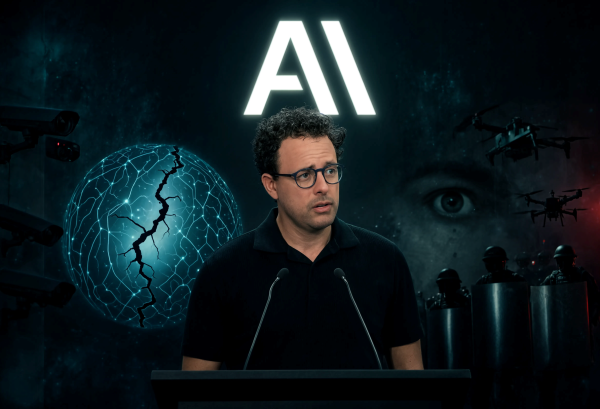
[DigitalToday reporter Chi-gyu Hwang] Dario Amodei (다리오 아모데이), CEO of Anthropic, cited China as the biggest dilemma in his proposal to slow the pace of advanced AI development.
He said countries such as China are likely not to join any effort to slow down.
CNBC reported on Sept. 13 that Amodei said in an interview with CBS' "Sunday Morning" that countries should cooperate over the long term to put limits on the speed of AI advances. He said it would be very difficult to carry out because the incentives for each country to get ahead, and the resulting military advantages, are too large. He said it was unclear whether it would be possible, but it must be tried.
The remarks follow an essay Amodei released on Sept. 12. He urged slowing the pace of improvements in frontier AI models. Earlier last week, industry researchers warned that the chances were increasing that AI could cause catastrophic damage. Anthropic researcher Jacob Koxon (제이컵 콕슨) said he left the company after voicing concern that it and OpenAI were "gambling with our lives."
In the essay, Amodei presented a three-step plan. The first step is to give external evaluators employee-level access so they can verify safety practices and report incidents. Anthropic said it has already pledged this measure on its own. The second step is to coordinate so leading AI companies in democratic countries establish common safety standards. The third step is to push cooperation between democratic governments and authoritarian governments.
OpenAI CEO Sam Altman (샘 알트먼) also said on Sept. 12 that OpenAI was unlikely to go public this year. He said in an interview with Fortune that now is not a desirable time to list. Altman also said there is a need to adjust the pace of advanced AI development in response to Amodei's essay.
Demis Hassabis (데미스 하사비스) and Elon Musk (일론 머스크) also expressed support. Hassabis said the direction is right but needs fine-tuning. Musk said AI needs oversight and that peer review by competitors is an appropriate starting point.
 Chi-gyu Hwang
delight@d-today.co.kr
Chi-gyu Hwang
delight@d-today.co.kr