
The government will set up a blockchain-focused education programme with joint participation by universities and companies to train advanced talent needed in the industry.
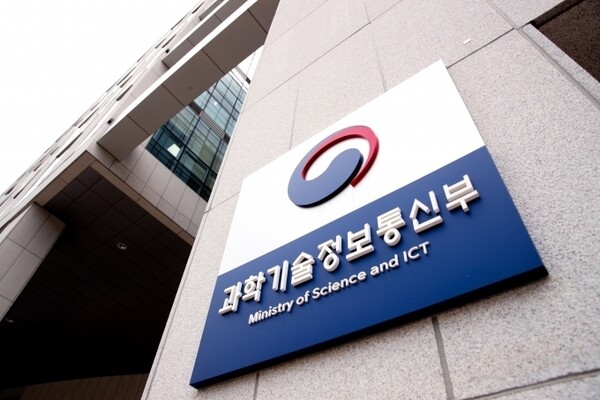
The Ministry of Science and ICT and the Korea Internet & Security Agency (KISA) said on Tuesday they selected two consortia as implementing organisations for the 2026 blockchain specialised university (graduate school) support programme.
The programme is designed to train blockchain talent with expertise and practical skills through cooperation between universities and industry. The initiative, being launched for the first time, will receive 700 million won in government funding this year. The selected consortia may receive support for up to 4 years following performance evaluations.
The Seoul Women's University consortium, which includes Seoul Women's University, Konyang University, Hansei University and Raonsecure, and the Incheon Technopark consortium, which includes Incheon National University and Inha University, were selected as implementing organisations.
Selected universities will run specialised curricula, including blockchain micro-degrees, for undergraduates and master's and doctoral students. The curricula will reflect industry demand and include blockchain fundamentals, decentralized identifier (DID), smart contracts and digital finance.
They will also run problem-solving projects and internships based on company demand. Students will directly carry out the planning, development and verification of blockchain services based on tasks presented by companies. The programme will also promote blockchain competitions and exchange programmes with overseas universities.
MSIT held a plaque presentation ceremony on Tuesday at a blockchain company growth hub in Songpa district, Seoul, and shared plans to operate the curricula.
MSIT plans to foster the specialised universities as hubs for training advanced blockchain talent and expand short-term intensive training for existing software developers and programmes to train top-tier talent. It will also strengthen the talent development foundation using organisations such as university ICT research centres and ICT Innovation Square.
Lee Do-kyu (이도규), director general for ICT Policy at MSIT, said, "Talent that understands on-site demand and can implement it into new services is becoming important." He added, "We will provide support so these specialised universities can establish themselves as key hubs for training advanced blockchain talent."
 Jin-ho Lee
jhlee26@d-today.co.kr
Jin-ho Lee
jhlee26@d-today.co.kr