
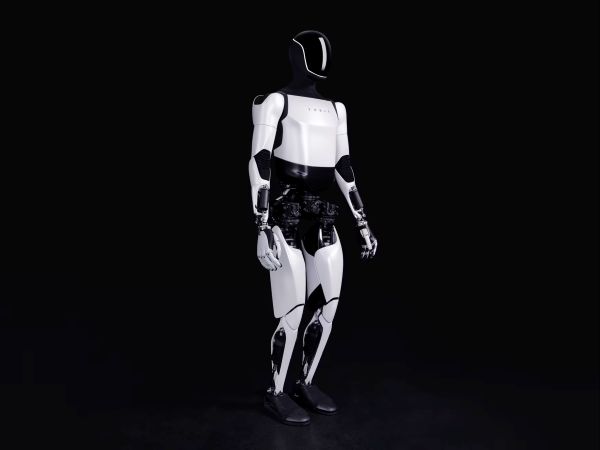
Elon Musk (일론 머스크) said Tesla's humanoid robot Optimus must solve tasks ranging from technology development to supply chains and establishing a mass-production system at the same time.
Business Insider reported on July 23 that Musk said on Tesla's second-quarter earnings conference call that Optimus is a very complex problem and no one has yet pulled it off.
Musk said Optimus could become Tesla's biggest product in the long term. He added that many barriers remain before it is commercialised. He said Optimus must meet requirements for dexterity, reliability, durability and safety to approach a level where it can walk, speak and think like a person.
He singled out hand function as a core challenge. Musk said he wants at least human-level dexterity and described the human hand as an amazing structure. He stressed that the task is not simply building moving robot arms, but reproducing sophisticated manipulation closer to a human hand.
He also pointed to parts procurement as an obstacle. Musk said no supply chain exists for Optimus, so Tesla had to build it itself from scratch. He said the company is producing some components in-house in the process. He explained that Tesla must secure enough artificial intelligence (AI) chips and solve memory, logic and packaging issues.
He said the difficulty is even higher at the mass-production stage. Musk said Optimus will be the hardest product Tesla has ever made to scale up manufacturing. He also said it is harder to ramp up output quickly because everything inside the robot is new.
Musk also appeared to be focused on lowering market expectations. He said he wants to properly match what people expect and focused on conveying a realistic development pace rather than excessive optimism. Musk, known for proposing aggressive timelines, highlighted the difficulty of development this time.
Tesla has said previously that it needed to build everything anew for Optimus, from motor, gearbox, control unit and sensor designs to the training system. Musk said at the time he would be surprised if Tesla could not produce 100,000 units a month within five years, but he appeared more cautious about scaling production in this announcement.
Changes in Tesla's earnings materials also stood out. Tesla used the terms "volume" and "mass" production when it explained Optimus mass-production plans in the prior quarter's materials, but did not use those terms in this release. The company appeared to have adjusted how it describes production timing and the pace of expansion.
Optimus' progress is also tied to Musk's personal compensation system. For Musk to fully realise the value of a recent compensation contract, he must achieve a milestone of delivering 1 million Optimus units within the next 10 years. Under those conditions, Optimus remains a project that is both Tesla's future business and a task that must prove real productisation and mass-production capability.
 Seung-a Yoo
ysah@d-today.co.kr
Seung-a Yoo
ysah@d-today.co.kr