
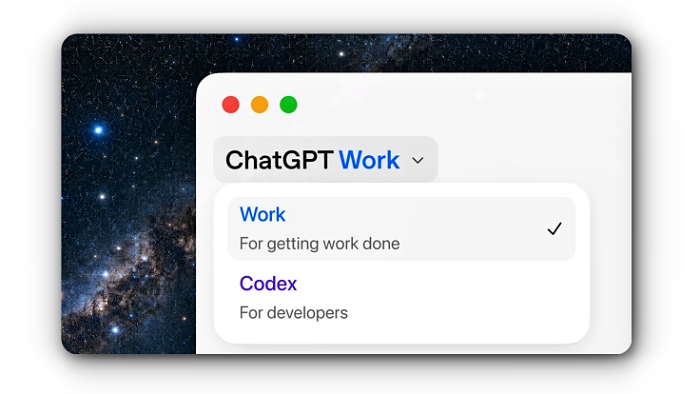
OpenAI said on Thursday it will hold a mini hackathon on July 25 at Seoul National University's Wooseok Economics Building for participants in the CMK Social Welfare Innovation Leader Academy, using ChatGPT Work and Codex.
The event is a core-competency training course of the CMK Social Welfare Innovation Leader Academy, hosted by the Hyundai Motor Chung Mong-Koo Foundation and run by SNU CSI. OpenAI will join as a partner and support participants in structuring problems from social welfare sites and writing product requirement documents (PRDs), then using ChatGPT Work and Codex to build prototypes in the form of webpages and apps.
Thirty people will take part, including social welfare practitioners and undergraduate and graduate students majoring in social welfare. Divided into five teams, they plan to develop AI-based services to solve on-site problems, including a home-visit care record and handover support tool, a mental health case record review tool, a single-person household living social network analysis app, an education welfare beneficiary change tracking tool and an early risk detection app for elderly patients discharged from hospital.
For example, they could build a case management support tool that compares and analyses multiple counselling records and organises signs of emotional isolation in children and adolescents in chronological order. They could also build an app that delivers to a case worker an elderly patient’s health status left by voice or text after discharge.
OpenAI Korea engineers will provide on-site support across the full prototype development process, including defining the development scope, diagnosing errors, improving code and prompts, and checking accessibility and safety.
Kiseok Ko (고기석), head of policy at OpenAI Korea, said, "The value of AI lies not in the technology itself but in helping people better define and solve real problems." He added, "This is a program that shows that even social welfare practitioners with no development experience can use ChatGPT Work and Codex to turn ideas into working prototypes."
Outputs developed at the hackathon will be upgraded through team action-learning projects from August to October. Participants plan to refine their solutions while reviewing feasibility for use in real social welfare sites, personal data protection and ethical considerations.
 Seulgi Son
sageson@d-today.co.kr
Seulgi Son
sageson@d-today.co.kr