
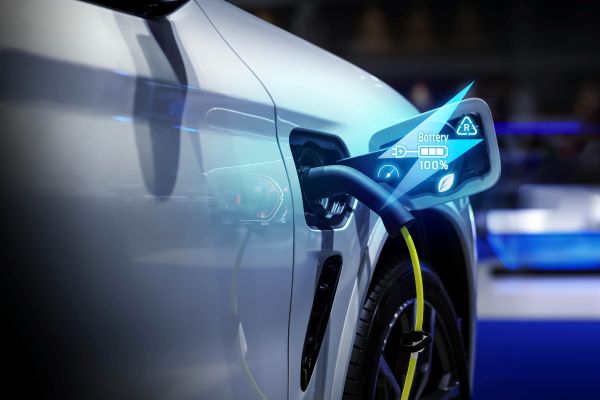
[DigitalToday reporter Jinju Hong] An analysis says electric vehicles (EVs) lose value far faster than internal combustion cars.
On April 3, EV outlet InsideEV reported, citing market research firm iSeeCars' Depreciation Study, that the average depreciation rate for five-year-old EVs stands at 57.2 percent. That is well above the average for all vehicles of 41.8 percent.
The data showed hybrids had the lowest five-year depreciation rate at 35.4 percent, with value declines slower than both EVs and internal combustion cars. EVs accounted for half of the 10 fastest-depreciating models, and none made the list of the 25 models with the lowest depreciation rates.
By model, depreciation was more pronounced for some vehicles. Early versions of the Volkswagen ID.4 recorded an average five-year depreciation rate of 62.1 percent, and the Nissan Leaf stood at 63.1 percent as a representative case. The 2021 Leaf was analysed as being at a disadvantage in the used-car market because its driving range stayed at about 149 miles (about 239 km) and it used a charging standard not compatible with some fast-charging infrastructure. Another analysis said a U.S. federal tax credit policy of $7,500 lowered new-car prices and increased downward pressure on used-car prices.
Some also interpret the steep depreciation as not meaning demand is absent. The outlet said, "This does not mean consumers do not want used EVs," and pointed to the rapid pace of technological advances in EVs, which can make models from five years ago become relatively quickly "outdated," as a main factor behind bigger depreciation. Major models such as the Hyundai Ioniq 5, Tesla Model Y and Ford Mustang Mach-E were analysed as weighing on residual values of earlier model years as improvements, price cuts and new trims continued after launch.
The report also presented hybrids as a basis for a reversal. iSeeCars said hybrid depreciation jumped to 56.7 percent in 2019, showing little difference from EVs now, but later became the slowest-depreciating powertrain as the market stabilised and consumer experience accumulated.
On this, the outlet analysed that EVs may also follow a natural curve seen in early technologies. Depreciation appears high at first due to lack of trust and rapid technological change, but value declines could gradually ease as the market matures over time.
 Jinju Hong
hongjj@d-today.co.kr
Jinju Hong
hongjj@d-today.co.kr