
The semiconductor market’s supply-demand structure has changed. First-quarter contract prices for general-purpose DRAM are expected to surge 90 to 95 percent from the previous quarter. Customers appear to be focusing on securing volumes rather than resisting, even as prices rise. The semiconductor industry has typically repeated booms and busts on a four-year cycle, building factories when demand increases and seeing prices collapse when supply floods the market. But that formula is being shaken. An analysis says AI demand is changing the industry structure itself, beyond a simple upswing.
Price data show the shift in the supply-demand structure. TrendForce said total DRAM industry revenue in the fourth quarter of last year rose 29.4 percent from the previous quarter to $53.58 billion. Contract prices for general-purpose DRAM rose 45 to 50 percent over the same period, and blended contract prices combining general-purpose DRAM and high bandwidth memory (HBM) gained 50 to 55 percent.
The trend is continuing in the first quarter. TrendForce forecast first-quarter general-purpose DRAM contract prices will rise 90 to 95 percent. Even with prices climbing this fast, server customers appear focused on purchases, even if they have to accept additional increases.
The backdrop is a demand-side change. Memory demand in the past was linked to PC and smartphone replacement cycles, but that is different now. TrendForce analysed that as AI applications expand from large language model (LLM) training to inference, cloud service providers' (CSP) data centre investment has spread beyond AI servers to general-purpose servers.
Big tech companies worldwide are staking their survival on building AI infrastructure, and that demand is expected to lead to long-term infrastructure investment regardless of economic swings of boom and bust. Daishin Securities forecast the memory semiconductor market will grow 157 percent from a year earlier to $563.2 billion this year. It said the demand-supply gap has widened to more than 100 percentage points, the largest in history.
It is also expected that supply will fail to keep up with demand for longer than anticipated. In past cycles, rising demand led to factory building and then price collapses when volumes poured out, but now even expanding factories makes it hard to increase production quickly. Daishin Securities said many new fab projects are under way, but their production contribution is expected to ramp up only after the first half of 2027. A shortage of cleanrooms is also a direct bottleneck.
HBM3E and HBM4, both high bandwidth memory, are also crowding out leading-edge process capacity, reducing room to supply general-purpose DRAM. With miniaturisation of 2D structures reaching its limit, uncertainty around process transitions has increased. That is another reason the likelihood of a price collapse from oversupply has fallen.
In effect, unit prices are rising as demand expands while supply remains steady. Export data also support that. Hanwha Investment & Securities said semiconductor exports in January to February surged 131.1 percent from the same months a year earlier. Semiconductors accounted for more than 80 percent of the total increase in exports over the period. It was the result of strong performance across general-purpose DRAM, HBM and NAND flash. The industry says unit prices could fall due to stock price adjustments, but it is not a time to worry about a peak because AI demand is solid and process difficulty is high.
Korean semiconductor stocks will rise further... supply-demand structure shift is the basis
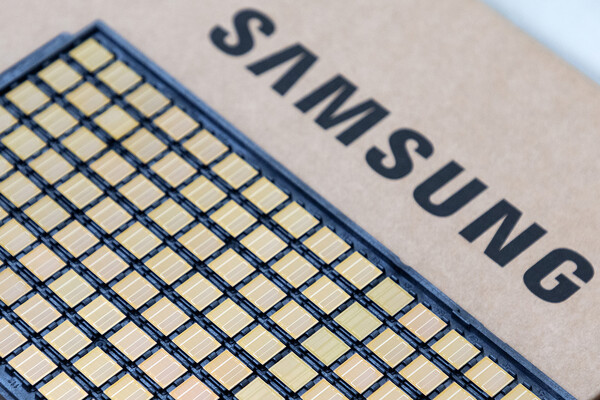
Samsung Electronics and SK hynix are direct beneficiaries of the changes in the supply-demand environment. TrendForce said Samsung Electronics' fourth-quarter DRAM revenue rose 43 percent from the previous quarter to $19.3 billion, reclaiming the top spot with a 36 percent market share. Daishin Securities forecast SK hynix's HBM shipments will rise 56 percent from a year earlier to 19.2 billion gigabits (Gb) this year, while Samsung Electronics' HBM revenue will jump 189 percent to 24 trillion won.
Still, China’s CXMT pushing for an initial public offering (IPO) in the first half and the possibility of YMTC listing within the year are potential risks. If a downturn returns, China’s semiconductor market share could instead expand rapidly. Before that, whether the structural shift succeeds is expected to be a variable that determines a rise in the value of Korean semiconductor companies.
For this reason, the two companies are speeding up a shift to a long-term growth structure rather than focusing on the cycle itself. Suppliers are changing sales methods to pursue stable growth, such as moving from quarterly contracts to 3 to 5-year long-term supply agreements. For example, HBM has structurally reduced inventory risk through an order-based 'pre-order then manufacture' system. Daishin Securities analysed that these changes will "reduce cycle volatility and lead to the generation of stable free cash flow."
 Daegeon Seok
d2dg@d-today.co.kr
Daegeon Seok
d2dg@d-today.co.kr