
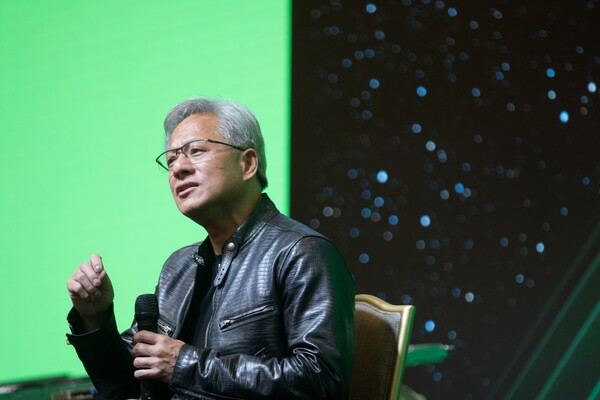
"The most worrying part of the Nvidia scandal is not the relationship between Jensen Huang and a figure suspected of being a Chinese spy, but that senior U.S. government officials continued to rely on him even after being warned of the risk."
Julian Gewirtz (줄리안 거위츠), who served as the White House National Security Council senior director for China and the State Department’s China coordinator and is now with Columbia University’s School of International and Public Affairs, stressed this in a guest essay in U.S. magazine The Atlantic on Wednesday.
Gewirtz cited President Donald Trump’s trip to China in May as an example. Secretary of State Marco Rubio was reported to have briefed related intelligence aboard a flight to Beijing, but Trump brought Huang along and treated him as a key adviser. Asked whether he should have acted on the warning, he replied, "I do not think so."
Questions are also growing over the administration’s response. According to Bloomberg, working-level Commerce Department staff faced unusual constraints in an investigation related to Nvidia. Axios reported that Treasury Secretary Scott Bessent pressed Commerce Secretary Howard Lutnick last week on why Megaspeed was not placed on a sanctions list.
Gewirtz called Huang a "double dove." Huang regarded the label of "China hawk" as a disgrace and replied, "I do not think so," when asked whether it mattered which of the United States and China wins in the AI race.
He has also dismissed warnings about the risk of an AI catastrophe. In Gewirtz’s view, Anthropic’s Dario Amodei (다리오 아모데이), who sees China as a security threat and warns AI could threaten humanity’s survival, stands on the opposite side as a "double hawk." He said, "Both say their positions are based on U.S. national interests, but their differences also align with each one’s business interests," adding, "Nvidia profits by selling as many chips as possible to customers around the world, and Anthropic benefits the more Chinese companies fall behind."
He also put the idea of 'AI primacy' — that the United States can stay ahead of rival countries forever through AI — on the table. He said even the assumption that the technological capabilities accumulated by U.S. companies carry over intact through the power of the U.S. government is questionable.
He said, "The U.S. and Chinese technology systems are intertwined through technology, capital, information and people. Chinese AI companies rely on overseas computing power, and U.S. AI companies depend on talent of Chinese origin," adding, "This interdependence is an economic opportunity, but also a channel for espionage, coercion and manipulation. The more the AI race relies on networks of companies, customers and governments, the more influence concentrates in a small number of individuals at the intersections."
He added, "The lesson of this scandal is not merely that they make mistakes," and stressed that systems are needed to check their influence and deal with the consequences of their mistakes before they become too powerful to be held accountable.
 Chi-gyu Hwang
delight@d-today.co.kr