
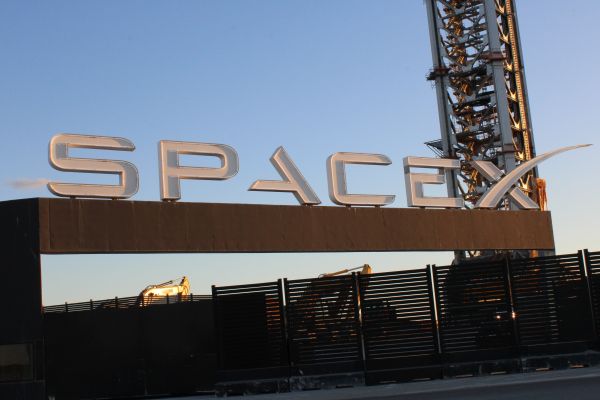
SpaceX has unveiled plans to build AI supercomputing campuses in Texas and Arizona with total investment of more than $74 billion.
Cryptopolitan, a blockchain media outlet, reported on Nov. 12 local time that the investment plan totals more than $24 billion for Texas and about $50 billion for Arizona. The figures are targets rather than amounts already spent, and power supply and permitting issues have yet to be resolved.
The core of the plan is to build large-scale AI computing facilities across the two regions. In Texas, construction has begun on about 444 acres at SpaceX's Starbase site. Local officials have confirmed approval for site grading work, but the supercomputer facility and a gas power plant are not yet operating. SpaceX said the plant is designed to generate electricity without relying on the public power grid.
A Starbase city commission public hearing on Dec. 9 is expected to be the first turning point for the Texas project. The commission plans to discuss a request for property tax breaks and a development agreement, but the meeting is not a procedure that determines final approval. SpaceX claimed the Texas project created more than 3,000 jobs, but the figure has not been verified. It expected more than 500 permanent jobs once operations begin.
How the site was brought into the city limits has also emerged as a community concern. Brownsville excluded the data center site from its city boundary, and Starbase later incorporated it. As a result, the site was no longer subject to Brownsville's moratorium on data center development. Brownsville city officials said, "Residents must trust that concerns about data center development, water resources, energy consumption and responsible growth are being taken seriously."
The project is larger in Arizona. Cochise County records show that resource company Tombstone Resources L.L.C. submitted an application to develop about 747 acres. The plan calls for building up to nine computing buildings in four phases. Power needs at full operation are estimated at 6 gigawatts. The county has not independently verified that figure. A related public hearing will also be held on Dec. 9.
SpaceX expects the Arizona campus to create 5,500 construction jobs and 1,000 permanent jobs. It also said it will use dry cooling and has no plan to use industrial groundwater. It also claimed it could cut electricity bills by up to 20 percent for members of a local power cooperative. Those economic effects have not been verified.
Local opposition is also growing. Reuters reported that a petition signed by 2,400 people was submitted asking authorities to reject permits for the Arizona project. The issue has become the impact of large data centers on local power and resources.
Separate from financing capacity, the plan needs to be viewed apart from actual spending. SpaceX filings with the U.S. Securities and Exchange Commission showed third-quarter revenue of $7.56 billion from its super intelligence segment, accounting for 51.9 percent of total revenue of $14.575 billion. Those are reported revenue figures, but investment in the Texas and Arizona campuses remains at the planning stage.
SpaceX separately announced a $40 billion lease financing agreement for GPUs for AI chips. The deal covers computing equipment and is separate from investment in the new campuses. That means the amount should not be added to the $74 billion Texas and Arizona investment plan.
Across the broader market, the trend of expanding AI infrastructure investment is continuing. Research firm Gartner forecast that AI infrastructure spending will reach $2.397 trillion in 2027. Gartner Vice President and research chief John David Lovelock said user demand is expanding inference work faster than expected, while training tasks are also requiring more compute, pushing up AI infrastructure spending.
What ultimately sets a cap on actual investment is power and cooling equipment. PwC warned about constraints on access to electricity, and the International Energy Agency pointed to strains on power grids and equipment supply, as well as on local resources. SpaceX has also previously seen some data center work delayed by power redundancy and cooling issues. As a result, December's public hearings are expected to be a gauge of whether mega-scale AI infrastructure plans can overcome the practical barriers of electricity and local acceptance.
 Jinju Hong
hongjj@d-today.co.kr