
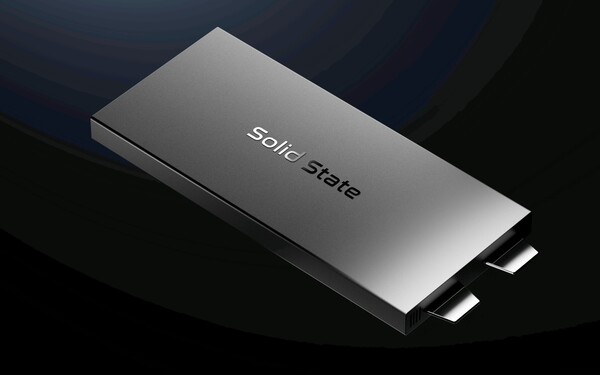
U.S. battery startup Solid Power is moving to restore the competitiveness of the U.S. battery industry with all-solid-state batteries. Rather than directly producing finished batteries, it is focusing on supplying solid electrolytes, a key material, and using existing manufacturers' production equipment. The company is seeking a turnaround with next-generation technology in a battery market led by Asian companies.
InsideEVs, an electric-vehicle outlet, reported on Wednesday that Solid Power is concentrating its capabilities on developing and producing sulfide-based solid electrolytes, a key material for commercialising all-solid-state batteries. It aims to speed up commercialisation by having existing battery makers adopt its technology in their production processes.
Solid Power, a Colorado-based solid electrolyte specialist, is competing with U.S. all-solid-state battery startups such as QuantumScape and Factorial. The company expects all-solid-state batteries to increase driving range and reduce charging time compared with existing lithium-ion batteries, while also lowering fire risk. Securing stable quality and yields in mass production remains a challenge.
Solid Power Chief Executive John Van Scoter (존 밴 스코터) stressed that all-solid-state batteries could lead a rebound in the U.S. battery industry. "All-solid-state batteries could be a way for the United States to re-enter the battery industry and secure competitiveness," he said.
Solid Power's differentiating strategy is to focus on electrolytes rather than finished cells. Electrolytes are a key material that helps lithium ions move inside a battery. Unlike existing lithium-ion batteries that use liquid electrolytes, Solid Power is developing sulfide-based solid electrolytes.
The company highlights that the technology is easy to integrate into existing battery manufacturers' production systems. Van Scoter said all-solid-state cells can be produced using roll-to-roll equipment used in existing lithium-ion battery production. He said this can reduce the burden of building new plants or replacing production equipment on a large scale.
It is also expanding its production base. Last month, Solid Power set up a 'Mobius' pilot production line at its Thornton plant in Colorado. The facility is targeting start-up by year-end and is expected to add annual production capacity of 45 tonnes of solid electrolyte. Including existing facilities, the company's pilot production capacity will rise to 75 tonnes a year. It plans to supply the produced electrolytes to automakers and battery companies.
Cooperation with automakers and battery makers is also continuing. Solid Power has worked with Ford, BMW, Samsung SDI and SK On. Joint development agreements with Ford and BMW have been concluded, and it has shifted its focus to discussing ways to expand production with major battery manufacturers.
In particular, a three-way agreement with BMW and Samsung SDI is a cooperation model that divides roles among the companies. Solid Power supplies solid electrolytes, Samsung SDI produces battery cells, and BMW is responsible for developing battery modules and packs. The approach is to push commercialisation by linking materials technology with existing manufacturers' production capabilities.
The company also presented high figures on performance. Solid Power said using its sulfide electrolyte with a silicon anode and a nickel-manganese-cobalt (NMC) cathode can raise energy density to 390 Wh per kg and enable more than 1,000 charge-discharge cycles. It said applying a lithium-metal anode could raise energy density to 440 Wh per kg.
It said the figures are not the performance of the electrolyte itself, but what can be expected when combined with electrode materials and cell design. Actual battery performance varies depending on the technology of the company that designs and manufactures the cell. Van Scoter also said, "We make the core that makes the cell work," but explained that key indicators such as energy density and lifespan depend on the final cell design.
Technical hurdles remain. A representative issue is dendrites. If needle-shaped lithium structures grow inside a battery, they can cause internal short circuits or reduce capacity. Solid Power said it is putting substantial engineering capabilities into solving the problem.
Testing for actual vehicle application has also proceeded. BMW last year released images of an i7 prototype fitted with Solid Power's silicon-anode-based solid-state battery. The timing of application in mass-produced vehicles has not yet been set in detail.
Solid Power is also focusing on defence, drones and humanoid robots, in addition to electric vehicles, as early markets. It views these areas as having shorter product certification processes and faster replacement cycles than automobiles. Van Scoter said of drones and robots that "the certification cycle is shorter and the platform life cycle is much faster."
Solid Power expects all-solid-state batteries to be applied first to some premium electric vehicles in the late 2020s and then spread to a broader market in the early 2030s. Attention is on whether the United States, which ceded leadership in the lithium-ion battery market to Asian companies including those in South Korea and China, can reshape the competitive landscape through next-generation battery technology.
 Jinju Hong
hongjj@d-today.co.kr