
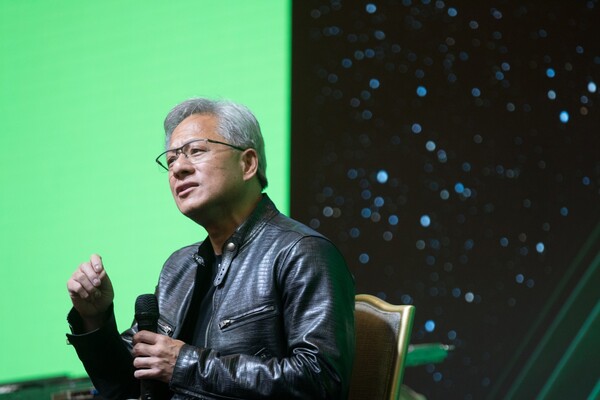
Jensen Huang (황젠슨), Nvidia's former chief executive, has agreed to testify after pressure from the U.S. Congress to compel his appearance. Huang, who has been at odds with lawmakers over export controls on advanced semiconductors to China, will appear before a House committee before Thanksgiving. The move is expected to intensify debate over Nvidia's China business and U.S. semiconductor export-control policy.
On Nov. 12 local time, IT outlet TechCrunch reported that Huang accepted lawmakers' request on Nov. 11 and decided to testify before Congress before Thanksgiving this month.
The testimony will be held behind closed doors. House Foreign Affairs Committee Chairman Brian Mast said he expects the briefing to be video-recorded and transcribed. It is not a public hearing, but Huang's remarks will remain on the official record, which is seen as meaning Congress will scrutinise the matter closely.
The push for testimony gained momentum after three Republican House members jointly stepped up pressure. Mast, House Select Committee on the Chinese Communist Party Chairman John Moolenaar and House Intelligence Committee Chairman Rick Crawford sent Huang a letter on Nov. 4 requesting he appear before their committees.
Huang initially did not respond to the request to testify, but changed his position after lawmakers raised the possibility of issuing a subpoena.
The central issue is Nvidia's semiconductor exports to China and U.S. export-control policy. Mast told reporters that he and Huang have had significant differences of opinion over export controls. He acknowledged Nvidia is an important U.S. company, but stressed there are serious questions Huang must answer.
The U.S. Congress has long been concerned that if advanced AI semiconductors flow into China, they could bolster China's capabilities in military and technological competition. Nvidia, by contrast, has said limiting access to the China market could weaken the competitiveness of U.S. companies and spur Chinese firms to develop their own semiconductors. The testimony is expected to focus on the effectiveness of export controls, Nvidia's response and the impact on national security.
Personal controversies surrounding Huang are also drawing attention alongside his congressional appearance. He was reported to have stepped down as CEO after allegations emerged of an affair with a woman suspected of spying for China. The personal allegations and semiconductor export controls are separate issues, so it remains to be seen what will be covered in the testimony.
The testimony comes as the United States treats semiconductor and AI supply chains as a core national security domain and strengthens its checks on China. Nvidia is a company that leads the global AI semiconductor market, and Huang's remarks could affect U.S. technology hegemony policy beyond any single company's export strategy.
Even though the testimony is closed, video and transcripts will remain, raising the possibility it could lead to further congressional investigations or follow-up steps. Key points to watch are what explanation Huang offers on China export controls and whether Congress will use it to tighten oversight of Nvidia and the semiconductor industry.
 Jinju Hong
hongjj@d-today.co.kr