
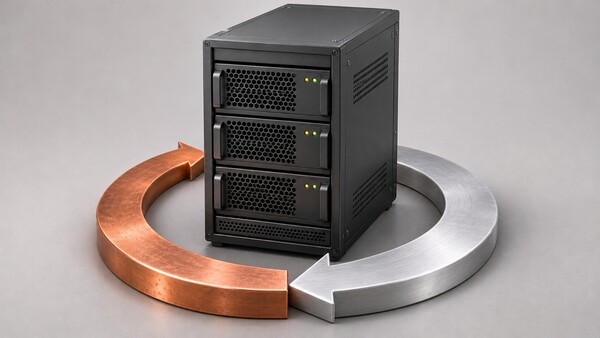
A race to build AI data centres is lifting demand for raw materials such as copper and aluminium, putting the recycling industry in the spotlight as a new investment target. A circular-economy model is also emerging that boosts supply-chain stability and cuts costs by reusing high-value parts such as servers and semiconductors.
Business Insider reported on Wednesday that Tazia Smith (타지아 스미스), chief executive of Closed Loop Capital Management, assessed that the rise in raw material demand from the expansion of AI infrastructure is a structural shift rather than a temporary phenomenon.
Smith explained at a Tech Insider event hosted by the outlet that competition among big technology companies to build data centres is providing new business opportunities for resource recycling firms.
In particular, high-value equipment inside data centres needs regular replacement to keep pace with advances in technology and performance improvements. Repairing existing equipment or recovering parts instead of discarding it can reduce the cost of buying new products while easing the burden of securing raw materials.
One example is U.S. recycling technology company Molg. The company is developing technology that uses robots to automatically dismantle servers and electronic equipment and reuse, remanufacture and recycle recovered parts.
Molg has attracted investment from Closed Loop Partners, the Amazon Climate Pledge Fund and ABB. It is also working with ABB to build robot-based small factories that automatically dismantle decommissioned data centre servers.
Smith said she is also working with companies that prevent leaks inside data centres to reduce environmental damage. She said AI companies are interested not only in supply-chain stability and cost savings for raw materials but also in technologies that reduce environmental burdens.
The importance of securing raw materials is also growing. The International Energy Agency said in its 2026 Critical Minerals Outlook report that even after accounting for supply projects currently under way, the copper supply shortfall could reach about 25 percent by 2035.
Still, the actual economics of recycling technologies and profitability by business model need separate verification. Attention is on whether competition to secure resources driven by data centre expansion will translate into growth opportunities for recycling and parts reuse industries.
 Jae-won Choi
ittt_0801@d-today.co.kr