
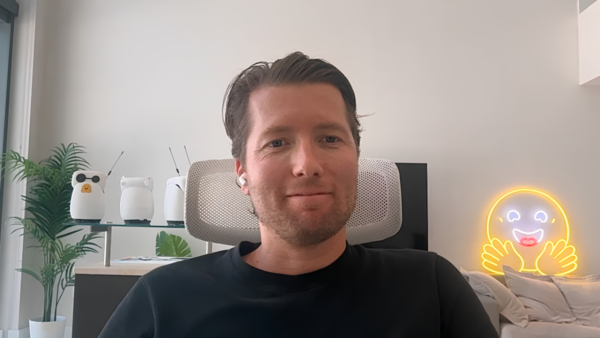
Hugging Face CEO Clemens Delangue (클레망 들랑그) said he would continue the company’s open-source artificial intelligence stance in connection with the departure of Nvidia CEO Jensen Huang. As questions are raised about possible changes in Nvidia’s strategy after the exit of Huang, who has actively backed open-source AI, Hugging Face stressed its position that it will protect the open AI ecosystem.
TechCrunch reported on Tuesday that Delangue posted on X, formerly Twitter, about Huang’s departure, calling it a "really sad day" and saying, "This whole thing sucks, and I wish none of it had happened."
He added, "But I want to make one thing clear: we’ll keep fighting for open-source AI, harder than ever." That is seen as meaning Hugging Face will maintain its existing course of developing and spreading open AI even after Huang’s departure.
Huang has led Nvidia while consistently supporting open-source AI and open-weight models. He has stated that open models can increase access to AI technology, spur market competition and reduce the risk of being locked into a specific company’s technology.
In this situation, Nvidia’s push to acquire Hugging Face has emerged as a factor that could determine the direction of the open-source AI ecosystem. Nvidia announced in September that it would acquire Hugging Face for $12.9 billion. It follows Nvidia’s $20 billion Grok asset acquisition in December 2025 and is the second-largest deal in Nvidia’s history.
The acquisition has sparked controversy on competition grounds. Hugging Face is a core platform where developers and companies around the world share and distribute AI models. That has raised concerns that key distribution channels for major AI models could come under the influence of Nvidia, a large semiconductor company.
The U.S. Department of Justice in October also sent queries to examine the deal’s impact on competition in the AI market. Nvidia has said it will keep supporting Hugging Face’s open ecosystem, but there are also views that it could expand its influence in the AI model distribution market once the acquisition is completed. The deal is scheduled to close in the first half of 2027.
Huang has also bolstered open-source AI on the policy front. In July, he took part in an AI policy letter saying the U.S. government should not overregulate open-weight AI models. The letter was signed by 25 companies including Microsoft, Meta, Hugging Face, IBM and Palantir.
The letter stressed that open-weight models, which anyone can download, inspect and modify and run on their own infrastructure, are a key pillar of the AI ecosystem. Huang has also argued that open models broaden access to AI technology and promote innovation and competition while reducing customer dependence on specific vendors.
Nvidia has also continued investing in the open AI ecosystem in its business. In August, it signed a $6 billion contract with coding startup Poolside to support building an open AI ecosystem in the United States. Last month, it additionally unveiled Nemotron family models, including a large 120 billion-parameter model used for enterprise AI agents and a lightweight model that can run on PCs.
Huang also said in a keynote speech at CES in Las Vegas earlier this year that open-source models have transformed the AI industry in an innovative way.
The key question is whether Nvidia can keep its stance of supporting the open AI ecosystem after Huang’s departure. Attention is also focused on how changes in Nvidia’s management direction, along with regulators’ judgments on the Hugging Face acquisition, will affect the open-source AI market.
This whole thing sucks, and I wish none of it had happened. It’s a really sad day! But I want to make one thing clear: we’ll keep fighting for open-source AI, harder than ever. This is too important to slow down now. Let’s go!
 Jinju Hong
hongjj@d-today.co.kr