
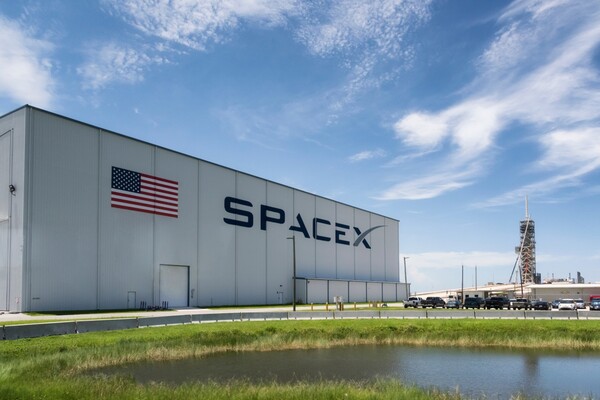
A forecast says SpaceX could add about 10 gigawatts of AI data centre computing infrastructure within the next 18 months. The figure is being discussed as comparable to the level of data centre capacity Google has accumulated over decades.
According to IT outlet TechRadar on Tuesday, the key question is whether SpaceX can raise computing infrastructure estimated at about 3 GW to more than 10 GW. Elon Musk said it could install an additional 10 GW of data centre capacity in 2027, and some in the market saw it as an excessive target. But SemiAnalysis said it was feasible based on development plans and construction speed across several sites, in-house manufacturing capabilities and access to dedicated power generation facilities.
It cited the expansion pace of Colossus 1 and Colossus 2. Colossus 2 was presented as an example in which power generation capacity grows from about 0.4 GW in January toward 2.4 GW in December. The facility is reported to have 89 gas turbines capable of producing about 2.5 GW and 1,377 Tesla Megapack batteries installed.
Power procurement remains the biggest challenge. Environmental regulations are expected to ultimately cap permitted output from gas turbines at about 1.24 GW. The facility is expected to receive an additional 1.2 GW from the power grid, but analysts still saw a need for a further 300 megawatts. Battery storage was cited as a means to supplement power during demand swings, and the possibility of additional contributions from external power sources remains.
Regulatory uncertainty is another factor. SpaceX is said to have received a temporary permit from Mississippi authorities to operate additional turbines, but must phase it out by July 2027. That means even if it quickly builds large-scale power facilities, it must also resolve long-term grid connection and regulatory compliance.
Links with Tesla were cited as a reason construction speed can be increased. SemiAnalysis mentioned the possibility that Tesla is producing modular mechanical and electrical equipment. In that case, installation teams can deploy completed systems directly to sites without waiting for the existing supply chain. That would mean it can reduce procurement delays versus rivals at a time when sourcing power equipment and core infrastructure is a bottleneck.
Analysts said they also identified about 9 GW of potential computing capacity across the sites under review. Musk previously said that as of Sept. 25, 550,000 GPUs were already running at Colossus 2, but the allocation by individual building has not been confirmed. Other development projects such as Gun Range and Project Spam also showed substantial construction progress in aerial photos.
Even if buildings are completed, computing capacity does not begin operating immediately. Actual capacity will not rise if power connections, cooling equipment and server installation remain pending. Satya Nadella (사티아 나델라), Microsoft chief executive, has referred to such issues, saying, "Even if chips are piling up in inventory, there could be situations where I cannot plug them in," and, "That is the problem I am experiencing now."
Ultimately, SpaceX's plan is hard to judge based on construction speed alone. It must secure GPUs, memory and power generation equipment on time, and expanding simultaneously across multiple regions would also require overcoming regulatory constraints, material supply and local opposition. Only if these conditions are met can the expansion of computing infrastructure to a scale comparable to Google's cumulative level become a reality within 18 months.
 Jinju Hong
hongjj@d-today.co.kr