
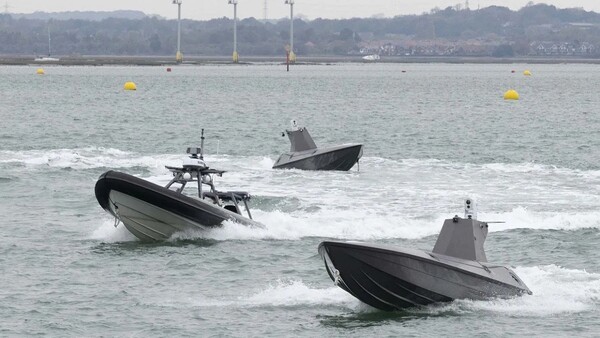
Britain's navy has set up its first autonomous squadron dedicated to operating unmanned surface vessels (USVs), the First Autonomous Squadron (1AS). As part of a “hybrid navy” plan that combines crewed warships with unmanned capabilities, it plans to expand drone use across operations including maritime surveillance and escort missions.
John Militer said on Nov. 9 that the navy held a launch ceremony for 1AS on Nov. 5 at Portsmouth Naval Base.
1AS succeeds Beehive, an unmanned surface vessel introduction and testing programme launched in 2025. It is commanded by Lt. Cmdr. Helen Coxon (헬렌 콕슨) and has about 180 personnel, a similar size to the crew of the Royal Navy’s Type 23 frigates. Personnel are split into two shifts to maintain a 24-hour operational posture.
Its main platforms are Rattler and the Kraken K3 Scout. Developed by UK SYOS Aerospace, Rattler is an unmanned surface vessel capable of remote control and swarm operations. In recent training near Scotland, several escorted patrol vessels and mine countermeasures support ships. The unmanned surface vessels were remotely controlled from a test ship in Plymouth more than 800 km away.
The K3 Scout, developed by Kraken Technology Group, is designed with surveillance, counter-drone and strike missions in mind. It has a range of at least 650 nautical miles, about 1,203.8 km, and can carry about 400 kg of equipment. It is designed to allow radar, interceptor weapons and electronic warfare equipment to be fitted depending on the mission.
The navy plans to operate unmanned surface vessels either independently or in coordination with crewed ships following the creation of the squadron. It is also pursuing a hybrid navy investment plan that will spend 1.5 billion pounds, about 2.71 trillion won, over the next four years.
Fleet Commander Steve Moorhouse (스티브 무어하우스) stressed that unmanned capabilities would help expand the fleet’s operational reach and strike power and contribute to building forces that are hard for enemy attacks to respond to.
Still, expanding unmanned capabilities does not mean a navy without crews. Moorhouse said human judgement and control would remain central in all operations.
European navies are moving faster to introduce unmanned capabilities, with France’s navy also outlining plans to convert its mine countermeasures squadron into an unmanned squadron.
 Jae-won Choi
ittt_0801@d-today.co.kr