
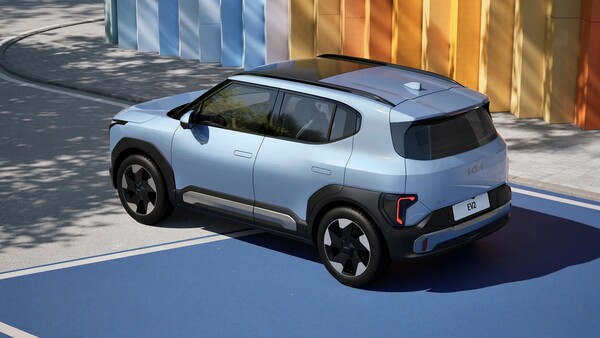
An analysis found that the spread of electric vehicles is cutting global oil consumption by about 1.2 million barrels a day. The figure is more than five times higher than five years ago. Electric vehicles are being seen not only as a way to respond to climate change but also as a tool to reduce dependence on crude oil imports.
CleanTechnica reported on Nov. 9 that the European environmental group Transport & Environment (T&E) said battery electric vehicles (BEVs) increased their oil displacement to about 1.2 million barrels a day this year from 215,000 barrels a day in 2021. That equals about 1.2 percent of global oil consumption and marks an about 5.6-fold rise over five years.
Electric passenger cars make up only 4.2 percent of the global car fleet, but account for 25 percent of new car sales. As the share of new-car sales rose rapidly from 6.6 percent in 2021, the amount of gasoline and diesel replaced by electric vehicles on the roads also increased.
The electrification effect for buses and trucks is also growing. Electric buses account for 5 percent of buses in operation worldwide, and battery electric trucks make up 1 percent of all trucks. In some countries, more than half of newly sold trucks are electric. T&E estimated electric buses and electric trucks further cut oil demand by up to 320,000 barrels a day.
Road transport accounts for about half of global oil consumption. T&E projected that if current policies continue, battery electric passenger cars will increase oil displacement to about 5.8 million barrels a day in 2034. That is comparable to the scale of prolonged oil supply disruptions during the 2026 energy crisis.
The greenhouse gas reduction effect is also significant. T&E said battery electric vehicles currently in operation help avoid more than 200 million tonnes of carbon dioxide equivalent emissions a year.
The figures are estimates calculated not by directly measuring actual oil consumption, but by using the amount of fuel that internal combustion engine vehicles would use to travel the same distance. The analysis used 0.019 barrels per passenger car per day, 0.2 barrels per truck and 0.15 barrels per bus, and excluded plug-in hybrids, vans and two- and three-wheeled vehicles.
 Jae-won Choi
ittt_0801@d-today.co.kr