
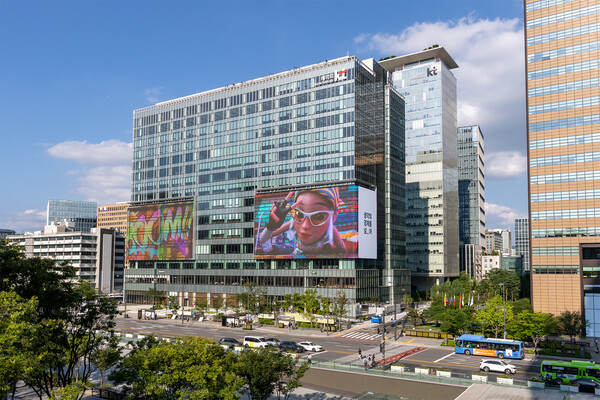
KT posted third-quarter consolidated revenue of 6.9975 trillion won and operating profit of 505.3 billion won. That was down 1.8 percent and 6.1 percent from a year earlier. A base effect from a one-off property sale gain booked last year and cost burdens in its core telecom business, including a customer rewards programme, weighed on results.
KT on Monday announced its third-quarter results on a consolidated basis. Operating profit also fell 22.1 percent from the previous quarter. Net profit for the period was 367.3 billion won, down 17.5 percent from a year earlier.
On a standalone basis, revenue was 4.9878 trillion won and operating profit was 299.3 billion won. That was down 2.4 percent and 12.2 percent from a year earlier. Higher costs from a customer rewards programme that ended in July and the push of AI transformation projects affected profitability.
Customer rewards programme hits wireless revenue decline; recovery since July
Revenue from the wireless business was 1.7380 trillion won, down 4.0 percent from a year earlier. Within that, wireless service revenue fell 3.9 percent to 1.6668 trillion won. Operation of the customer rewards programme and subscriber churn during a contract termination fee waiver period weighed on performance.
KT ran a customer rewards programme from February to July this year after a hacking incident last year. It provided wireless customers with an additional 100 GB of data per month for six months and offered benefits including a six-month pass for Tving or Disney Plus and membership discounts.
It also implemented support measures including additional roaming data and insurance to compensate for losses from cyber financial crimes. Earlier, it implemented a contract termination fee waiver in January. Subscriber churn during this process weighed on wireless business results.
After the customer rewards programme ended in July, subscribers and average revenue per user, or ARPU, showed a recovery trend. KT is seeking to improve wireless business profitability through flagship device launches and expanded sales of premium plans.
KT's monthly ARPU rose to 34,711 won in September from 33,963 won in July and 34,507 won in August. Quarterly ARPU was 34,394 won, down 2.6 percent from a year earlier. As of the end of the third quarter, 5G handset subscribers rose 1.1 percent from a year earlier to 11.17 million. 5G accounted for 83.5 percent of total handset subscribers.
Revenue from the fixed-line business was 1.3082 trillion won, down 1.8 percent from a year earlier. Declines in home landline revenue and lower advertising and pay-per-view content revenue in the media business weighed on results.
Revenue from high-speed internet rose 0.1 percent from a year earlier to 637.4 billion won. Media revenue fell 2.4 percent to 521.5 billion won. High-speed internet and IPTV subscribers rose 1.4 percent and 0.5 percent, respectively. Among total high-speed internet subscribers, the share of gigabit internet users expanded to 70.3 percent.
Revenue from enterprise services was 925.9 billion won, down 0.7 percent from a year earlier. A base effect from the end of a large construction project last year was reflected despite growth in enterprise internet and data and AX businesses.
In contrast, cumulative enterprise service order intake through the third quarter rose more than 20 percent from a year earlier. That reflected continued orders for large projects including networks for AI data centres and AI computing centres. KT plans to step up the conversion of existing orders into revenue from the fourth quarter.
AX revenue growth and AIDC expansion keep group growth intact
KT is accelerating expansion of its AX business alongside a recovery in profitability in its core telecom business. Cumulative AX revenue through the third quarter rose 11.9 percent from a year earlier. KT aims to more than double AX revenue by 2028 versus 2025.
In AI infrastructure, it plans to expand AIDC supply capacity to more than 1 GW by 2031. Starting with Bucheon centres 1 and 2 in 2027, it plans to bring six new data centres online in phases, including Gaebong, Gunsan and Yongin in 2028 and Ansan in 2029.
It will also expand global network infrastructure. It plans to secure an additional 90 Tbps or more of submarine cable capacity by 2031 and diversify its landing station hubs beyond Busan to Jeju and the southwest and southeast regions. It also plans to link AI edge infrastructure using about 3,500 offices nationwide to strengthen the foundation for its AX business.
On Oct. 30, it launched a platform called KT Token Factory that lets users choose among various AI models and manage usage costs. It signed what it described as South Korea's first official partnership with global AI model routing platform OpenRouter and plans to expand the number of provided models to more than 500.
It is also expanding cooperation with Palantir. After signing a main project contract with the financial sector in August, it is broadening applications to manufacturing and large non-financial companies. KT plans to improve AX business profitability by internalising capabilities of specialised staff who design and build solutions at customer sites.
Major group affiliates continued growth, centred on data centres, real estate and content businesses.
KT Cloud posted third-quarter revenue of 268.2 billion won, up 7.7 percent from a year earlier. Colocation revenue rose as utilisation at its Gasan data centre increased. Demand from public institutions for cloud transitions and an expansion of support projects for high-performance computing also contributed to results.
KT Estate posted third-quarter revenue of 260.0 billion won, up 39.1 percent from a year earlier, driven by a Daejeon Dunsan sales project and growth in its hotel and rental businesses. Its hotel business continued to grow on demand from foreign tourists and rising spending per guest, while rental housing extended growth on high occupancy rates.
Revenue at content subsidiaries was 171.8 billion won, up 12.1 percent from a year earlier. KT Studio Genie saw results supported by the success of original content including "New Recruit 4: Sabotage" and expanded sales to global online video services. KT Millie's Library steadily expanded its subscriber base.
Kbank's third-quarter net profit rose 119 percent from a year earlier. Customers increased by 1.91 million from a year earlier to 16.88 million. Loan balances surpassed 20 trillion won. Growth in lending centred on loans to individual business owners and an expanding customer base contributed to improved results.
KT, under its corporate value enhancement plan, completed a 250.0 billion won share buyback this year in September. On Oct. 13, it decided on a third-quarter cash dividend of 600 won per share. It plans to pay the dividend on Nov. 12.
KT aims to achieve a consolidated return on equity of 9 to 10 percent by 2028 through AX business growth, improved profitability and asset efficiency measures over the mid to long term.
Min Hye-byung (민혜병), KT's chief financial officer and executive vice president, said, "The third quarter was a period in which we specified our AX growth strategy and continued the growth trend of key group affiliates amid changes in the internal and external management environment." He said, "Going forward, we will restore profitability in our core telecom business and fully accelerate B2B and AX growth to do our best to enhance corporate value as an AX platform company."
 Jin-ho Lee
jhlee26@d-today.co.kr