
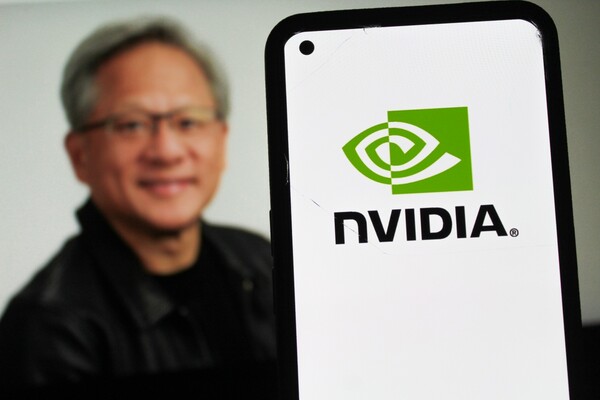
Nvidia has launched an independent investigation into possible foreign intelligence activity targeting CEO Jensen Huang (젠슨 황). As suspicion grows that Chinese intelligence-gathering efforts may have been linked to Huang, attention has also returned to his opposition to semiconductor export controls on China.
Business Insider reported on Nov. 9 that Nvidia formed an independent committee to investigate the matter. The board said it has found no evidence so far to conclude that national security or company secrets were compromised.
The controversy stems from reporting by the New York Times. It reported that U.S. authorities are looking into the possibility that Alice Huang, an executive at Megaspeed, a Singapore technology company that is a Nvidia customer, may have been recruited to collect information for the Chinese government.
The fallout grew after allegations emerged that the information-gathering attempt may have targeted Jensen Huang. Alice Huang is not related to him, and there has been no confirmation of circumstances suggesting that the CEO was actually affected by intelligence activity. It is also unclear since when the two have been connected.
The investigation is also drawing attention because it comes as Jensen Huang has openly opposed U.S. semiconductor export controls on China. While acknowledging China as a U.S. competitor, he has argued that cutting off a huge technology market would be a long-term loss for U.S. companies and industry.
In a Bloomberg interview last month, Huang said he has sought to persuade U.S. policymakers that it is important to maintain ties with the Chinese market. Seemingly referring to export restrictions on China, he said, "We made a mistake. And it is difficult to reverse this mistake." He also stressed that China is "not our enemy". He argued that dialogue between the United States and China is necessary even for artificial intelligence safety.
He repeated similar views in other public remarks. In a Channel News Asia interview in May, he said it would not be wise for the United States and China to build separate AI ecosystems. In a keynote speech in Berlin the same month, he said the United States is ahead in AI but that China is also a very strong competitor.
Huang has said he is concerned that export controls could instead strengthen the competitiveness of Chinese semiconductor companies. Nvidia said in its annual report in February that its effective exclusion from China’s data center computing market has increased room for competitors to build an ecosystem that could enable them to expand into international markets.
Huang also said in an April podcast that Nvidia’s market share in China had fallen to zero. He believes the more U.S. companies shrink their foothold in China, the more local companies such as Huawei gain opportunities to build technological competitiveness.
His criticism of export controls peaked at a press conference at Computex in Taipei, Taiwan, in May 2025. Huang called the U.S. AI chip export controls introduced in 2022 a failure. He said the measures inflicted billions of dollars in losses on U.S. companies and pushed Chinese customers to local firms such as Huawei.
In a CNBC interview the same month, he said China’s AI chip market could grow to $50 billion within 2 to 3 years. He warned that failing to access that market would mean huge losses for U.S. companies.
Huang has not said he would ignore U.S. export controls. In a Bloomberg interview in September 2024, he said Nvidia is doing its best to support Chinese customers while complying with U.S. export-control requirements. He also said balancing national security and the competitiveness of the U.S. technology industry should be left to the government’s judgment.
Nvidia has in fact redesigned AI chips for China to meet U.S. regulatory conditions. In an earnings call in February 2024, Huang said the company modified products to comply with export controls and began supplying samples to Chinese customers. It was a strategy to maintain competitiveness in China within the limits of the regulations.
The investigation could weigh on Nvidia’s China business strategy beyond allegations of intelligence activity surrounding Huang personally. The board said it remains confident in Huang, but it expects tensions to persist between U.S. national security concerns and Nvidia’s interests in not losing the Chinese market.
 Jinju Hong
hongjj@d-today.co.kr