
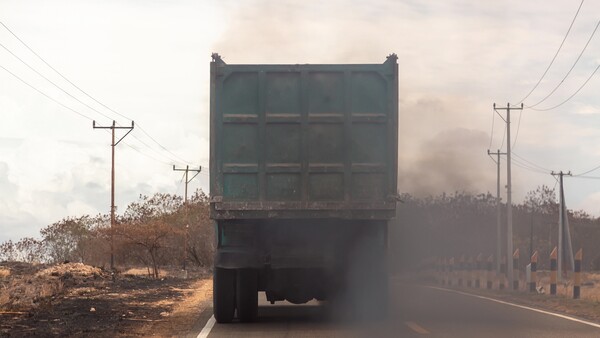
Nearly half of European Union (EU) cities have been found to fall short of tightened standards for fine particulate matter that will take effect from 2030. Calls are growing to cut pollution sources inside and outside cities, including not only vehicle exhaust but also agriculture and heating.
Cleantechnica reported on Oct. 28 that ClientEarth, an international environmental law group, and the World Resources Institute (WRI) published a report analysing air quality in 394 EU cities.
Based on verified 2024 data, 181 of the 394 cities surveyed, or 46 percent, exceeded the 2030 standard for fine particulate matter (PM2.5).
The EU brought into force revised air quality directives in December 2024. Under the changes, the allowable annual average concentration of PM2.5 will be tightened from 25 micrograms per cubic metre to 10 micrograms from 2030. The annual average limit for nitrogen dioxide (NO2) will also be lowered from 40 micrograms to 20 micrograms.
The report said cities would struggle to meet the targets through their own transport policies alone. That is because an average of about two-thirds of PM2.5 measured in cities originates outside their administrative boundaries.
It said management must also cover ammonia emissions from agriculture, pollutants from ports and airports, and dust generated by tyre and brake wear.
It presented key measures including expanding restricted traffic zones, improving walking and cycling infrastructure, and electrifying public transport. It also stressed the need for legal and financial support at central government and EU levels, as well as from local governments.
In Poland, Krakow reduced PM2.5 pollution by up to 26 percent by removing about 45,600 coal and wood heating units. That was assessed as an outcome of the EU, and central and local governments pursuing regulation and financial support together.
Emma Bird (엠마 버드), a lawyer at ClientEarth, said the new air quality standards were an important opportunity to protect public health. She said reforms were needed to cut cities' reliance on cars.
Steven Bland (스티븐 블랜드), WRI's head of strategy for European urban systems, said heatwaves were worsening the risks of air pollution. He stressed the need to cut pollution from major emitting sectors such as transport, agriculture and energy, and to reflect air quality improvement goals in investment policy as well.
The report also recommended that intergovernmental cooperation, pollution source management and sustained increases in investment are essential to meet the 2030 standards.
 Jae-won Choi
ittt_0801@d-today.co.kr