
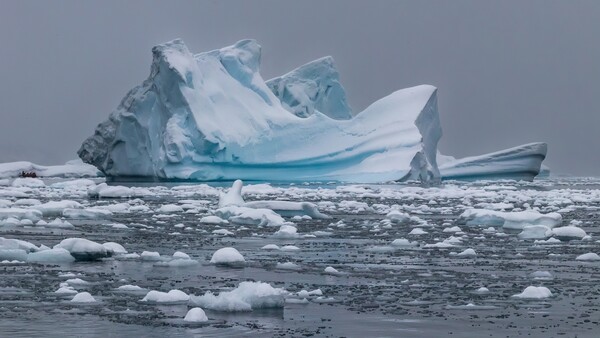
A study has found that seawater in the deep Southern Ocean is becoming saltier as sea ice around Antarctica shrinks sharply. Concerns are being raised that the shift could affect global ocean circulation and, over the long term, change weather and climate.
A joint international research team published its findings in Nature Climate Change, IT media outlet Ars Technica reported on Oct. 28. The study analysed how declining Antarctic sea ice affects seawater salinity and density.
The researchers analysed six observational datasets collected from 2004 to 2024. They included data from Argo, an ocean observing system that moves underwater and measures seawater temperature and salinity.
The analysis found that salinity in Antarctic Intermediate Water, distributed at depths of about 700 to 1,200 metres in the Southern Ocean, has increased noticeably since 2016. Seawater density also rose and the layer shifted deeper.
It was the result of a reversal in a freshening trend that had continued for decades. Around Antarctica, summer sea ice melts and supplies freshwater to the ocean, but that supply has declined since 2016 as sea ice area fell sharply.
Antarctic sea ice reached its highest level since satellite observations began in 2014 but then declined sharply. In 2023, sea ice area fell to about 2.6 million square km below the 1981 to 2010 average.
The problem is that the impact does not remain confined to Antarctica. Antarctic Intermediate Water carries heat, carbon, oxygen and nutrients as it moves into the Atlantic, Indian and Pacific oceans.
Changes in salinity and density in this layer could also affect heat exchange between the ocean surface and the deep sea. The researchers raised the possibility that shifts in how the ocean stores heat could lead to changes in deep-ocean warming, sea level rise and atmospheric circulation.
They also cited the possibility that storm formation patterns and tracks could change. Specific weather impacts and when they might occur have not yet been confirmed.
Michael Meredith (마이클 메러디스), an oceanographer at the British Antarctic Survey, said Antarctic sea ice loss is already affecting seawater characteristics and circulation. He added that it is difficult to judge whether the changes mark a permanent shift.
The researchers said existing climate models do not fully reflect the recent decline in Antarctic sea ice, and stressed the need for continued ocean observations and improvements in climate forecasting models.
 Jae-won Choi
ittt_0801@d-today.co.kr