
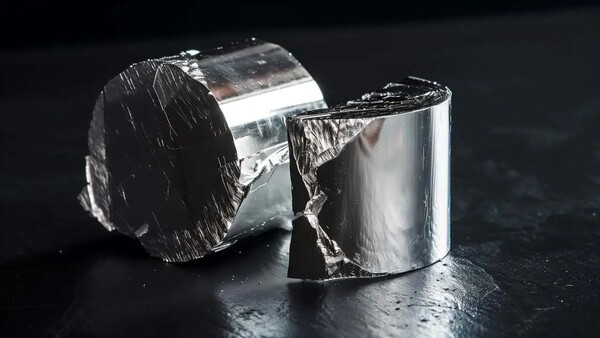
A biomimetic separator membrane technology that can separate lithium, a key material for electric vehicle batteries, more quickly and in a more environmentally friendly way has been developed. The method selectively extracts lithium while reducing the use of hazardous chemicals and solvents. If commercialised, it could help lower the environmental burden of battery-material supply chains.
On Oct. 28, InsideEV reported that researchers at the University of Texas at Austin developed an artificial channel-based membrane inspired by how living cells move ions. The structure allows lithium ions to pass while filtering out other components. The goal is to improve the complex separation steps used in existing extraction processes.
Lithium is obtained through hard-rock mining, extraction from brine, and recycling used batteries. But lithium is not the only substance present in raw materials, making separation and refining essential. The process can be time-consuming and costly and can also add environmental burdens through chemical use and waste generation.
To address these issues, the researchers designed nanometre-scale artificial channels and applied them to a membrane. The approach adjusts the channels' chemical properties to create differences in how lithium ions and other components interact. This lets lithium pass selectively while blocking unnecessary materials. Another feature is that it aims for a process that does not rely on hazardous chemicals or solvents.
Manish Kumar (마니시 쿠마르), a professor in the Department of Civil, Architectural and Environmental Engineering at the University of Texas at Austin, explained that lithium is widely used in mobile phones, cars and power grids, but extracting it while reducing environmental burdens remains difficult. The researchers focused on building a process that is faster, cleaner and easier to operate than existing methods.
The research also suggested the possibility of expanding the technology to other critical minerals beyond lithium. Harekrushna Behera (하레크루슈나 베헤라), a research scientist, stressed that the team secured a design basis that helps it understand chemical interactions between ions and the channel entrance. By tuning the channel's chemical properties, it can develop membranes that respond selectively not only to lithium but also to other mineral ions, he said.
The technology cannot be applied directly to industrial sites, though. It must be verified whether separation performance confirmed in the laboratory holds up in large-scale processes. Stability during long-term operation and production costs also need to be checked. A key to commercialisation is whether selectivity and processing speed can be secured in the complex composition of real raw materials.
As electric vehicle adoption and battery demand continue, the lithium supply chain is placing growing importance not only on expanding mining volumes but also on technologies that improve refining efficiency and reduce environmental impact. Effective separation of lithium from mixed materials such as brine or spent batteries could help improve resource utilisation.
The success of the technology will depend on how much it can actually reduce the use of chemicals and solvents, and whether laboratory-level performance can be reproduced at industrial scale. If follow-up studies also prove economic feasibility and stability, it could develop into a new alternative for reducing the environmental burden of lithium extraction processes.
 Jinju Hong
hongjj@d-today.co.kr