
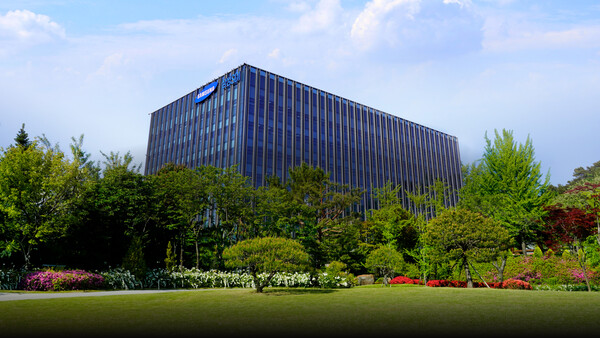
Samsung SDI achieved a return to profit in the third quarter by increasing sales of energy storage systems for AI data centres. Samsung SDI said on Oct. 29 it posted third-quarter revenue of 46.856 trillion won and operating profit of 407.8 billion won. Revenue rose 52.6 percent from a year earlier and operating profit swung to a gain. The operating margin was 8.7 percent.
Operating profit doubled from 203.8 billion won in the previous quarter. It was the highest level in 12 quarters since 496.0 billion won in the third quarter of 2023, and the company posted a loss of 591.3 billion won in the third quarter a year earlier. Revenue rose 20.9 percent from 38.765 trillion won in the previous quarter. Revenue in the same period a year earlier was 30.714 trillion won.
The earnings improvement was led by the battery business. Battery division revenue rose 55.3 percent from a year earlier to 44.099 trillion won, and operating profit swung to a gain of 361.9 billion won.
As the global AI data centre market grows, sales of ESS and battery backup units rose sharply. The company said expanded sales of cylindrical batteries for power tools and electric vehicles also contributed to results.
The electronic materials division posted revenue of 275.7 billion won and operating profit of 45.9 billion won, up 18.9 percent and 18.3 percent, respectively, from a year earlier. That reflected higher sales of semiconductor patterning materials and display film materials for foldable smartphones.
The company said it has won orders of more than 60 GWh so far this year as U.S. ESS demand increased. It will use the Synergy Cells plant in Indiana as an ESS battery production base and expand it in phases to secure production capacity.
It also stepped up its lithium iron phosphate battery business. It began mass production of high-capacity prismatic LFP cells at the StarPlus Energy (SPE) plant in the United States, and in Europe it secured an LFP battery project for electric vehicles. It also signed a long-term supply contract for LFP cathode materials with a major domestic materials company. The company said the steps are aimed at responding to demand in the United States to move away from China.
It is also expanding its product portfolio for AI data centres. It recently unveiled cylindrical LFP cells for battery backup units and plans to diversify applications and grow the scale of its LFP business.
In next-generation areas, it shipped samples of all-solid-state batteries for humanoids. For cylindrical batteries, it secured new clients in the aerospace and humanoid sectors.
The company expects the ESS market to continue growing in the fourth quarter, and expects electric vehicle demand to rise in Europe while the United States continues to slow for the time being. It plans to bring forward the conversion of its U.S. LFP battery lines and to finalise within the year long-term supply contracts under discussion for power ESS and uninterruptible power supplies.
In the domestic ESS market, it will take part in the third central contract market tender to strengthen its position. For small batteries, it will increase existing volumes for global cloud service providers and secure new customers.
For electric vehicle batteries, it will push ahead as planned with building mass-production lines and a supply chain at its production base in Hungary. For electronic materials, it will expand sales of semiconductor patterning materials, and for OLED materials it plans to focus on entering new platforms for key customers.
A Samsung SDI official said, "We will continue to push for mid- to long-term growth based on profitability." The official added, "We expect solid growth in the ESS and small battery businesses to continue in the fourth quarter as well, sustaining the profit trend."
 Dae-geon Seok
d2dg@d-today.co.kr