
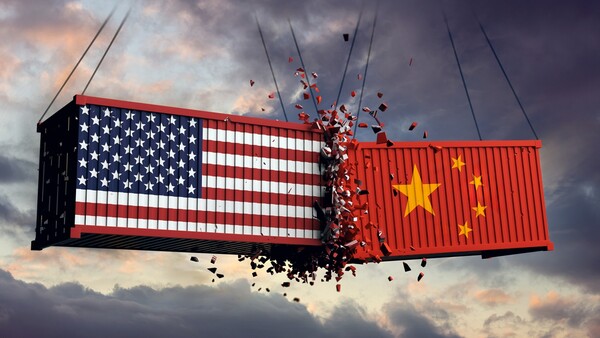
The U.S. government is expanding import and sales restrictions that targeted Chinese telecommunications equipment to consumer devices such as drones, routers and robot vacuum cleaners. The measures are framed as blocking national security threats, but controversy is growing over their effectiveness and the availability of alternative production capacity in the United States.
According to tech outlet The Verge, the U.S. Federal Communications Commission has repeatedly tightened regulation of foreign-made electronic devices since the launch of Donald Trump’s second administration.
The United States has for more than 10 years identified Chinese telecommunications equipment makers such as Huawei and ZTE as national security threats. It later limited approval of new equipment from those companies and required telecom operators to remove and replace existing gear. Some telecom companies have not yet completed the replacement work.
The scope of regulation expanded to foreign-made drones in December last year. In March this year, consumer routers made overseas were added, and in July advanced robots and power inverters were included. The restrictions on advanced robots cover not only autonomous driving robots but also robot vacuum cleaners and robotic lawn mowers that meet certain requirements.
The key is the FCC’s limits on equipment approvals. Overseas-made products placed under the restrictions, in principle, cannot receive approval for sale in the United States for new models. Products already approved can continue to be sold or used, and exceptions are allowed with conditional U.S. government approval.
The FCC argues that foreign-made devices could be abused for personal data leaks, remote manipulation and disruption of communications networks. The outlet pointed out that there is a lack of detailed public material proving threats from specific products and that the standards for exemption approvals are also unclear.
Netgear and Asus received conditional approvals for some router products, but Chinese-linked company TP-Link is facing difficulties launching new products. TP-Link has even presented a plan to invest about $1.0 billion, or 1.34 trillion won, to produce routers in the United States.
Securing alternative supply chains is also a task. Most drones and routers sold in the United States are produced overseas, and Chinese companies also have a strong market influence in robot vacuum cleaners.
The U.S. government expects the measures to help foster domestic manufacturing and strengthen supply chain security, but some are concerned about reduced consumer choice and higher prices.
 Choi Jae-won
ittt_0801@d-today.co.kr