
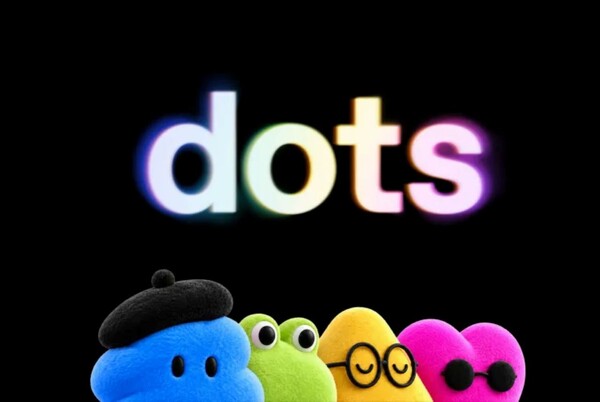
[DigitalToday intern reporter Seung-a Yoo] OpenAI has unveiled Dots, an always-on AI agent to take on Meta's AI assistant Muse.
On Sept. 29 (local time), OpenAI announced Dots at its annual developer event DevDay. Dots performs tasks in the background across connected applications, and it learns users' preferences and ways of working to gradually personalise results.
Dots is based on GPT-6 Astra. It can connect to more than 4,000 apps using its own cloud computer and web browser. Users can assign tasks to Dots and check progress by message or answer questions as needed. Dots can carry out multiple tasks at once and keep working toward a goal without additional instructions from the user.
Users can message Dots or make voice calls through ChatGPT on the web, desktop and mobile. Dots is also available on Slack and Microsoft Teams, and task context across each app and device carries over. A direct text messaging feature is also set to be added.
Dots can handle a broad range of tasks. App developers can have Dots find recurring issues in customer feedback, fix them, and develop and test features. Dots provides outputs that can be reviewed along with a video showing the changes. Content creators can have it identify parts of interview scripts for video clips and write show notes and social media posts. Scientists can have it reflect newly acquired data in papers and update analysis results and charts.
Dots uses a cloud computer that users can open at any time to check the work process directly. If needed, users can grant permission for it to connect to a user's laptop and work together. When logging into supported websites, it can use saved passwords, but the password itself is not exposed to the model.
Even when users are not actively interacting with Dots, it can use connected apps to find tasks it needs to do. OpenAI described this as "active investigation". During this process, it uses connected apps in read-only mode, so it cannot send messages, change app content or directly control a user's browser and computer.
Safety guardrails for Dots have also been strengthened. Dots applies basic rules to determine when to act independently and when to ask users for approval. Users can set "custom rules" to allow or block specific actions and require approval when needed. An "automatic review" feature checks whether tasks that affect accounts or share information meet the user's rules and safety requirements, and decides whether to continue, seek approval, or hand the task to the user. Some sensitive tasks, such as changing passwords, must always be handled directly by the user.
Dots comes weeks after Meta introduced its personalised AI assistant Muse. Muse is also an AI agent that can perform web searches, shopping, document writing and goal tracking. Still, concerns about safety have been raised around Muse. One user claimed their address was sent without consent to a counterparty in a Facebook Marketplace transaction.
Users can currently create 1 basic Dots and set its name and configuration as desired. OpenAI plans to allow users to run multiple Dots at the same time and increase each Dots' speed or monthly throughput. It will also provide a collaboration space called ChatGPT Space for using Dots with colleagues.
OpenAI is also testing "expert Dots" that take on specific roles within companies. Companies can assign each Dots a separate identity, credentials and system access rights to handle specific tasks such as procurement, invoice processing and customer support. It is currently being run as a pilot for businesses.
Starting on the day, Dots will be available to ChatGPT Pro and Business Premium users in some markets, and Enterprise, Education and Healthcare users can use a beta version if an administrator enables it. The first Dots is included in the Pro and Business Premium plans at no additional cost. Conversations with Dots do not count toward ChatGPT usage limits, but tasks started or managed by Dots in Codex or ChatGPT Work are subject to those usage limits.
 Seung-a Yoo
ysah@d-today.co.kr
Seung-a Yoo
ysah@d-today.co.kr