
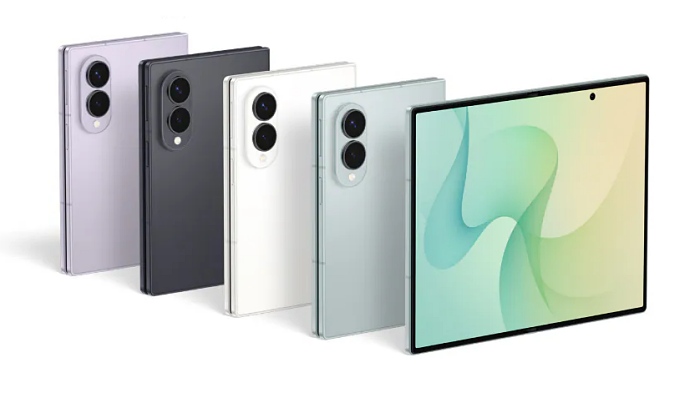
[Digital Today reporter Jinju Hong (홍진주)] Foldable phones are positioning themselves as an alternative to smartphones, highlighting big screens and multitasking. But durability, repair costs and app compatibility remain weaknesses. In this regard, IT media outlet Engadget on Sept. 27 (local time) looked at the pros and cons of foldable phones.
The biggest advantage of foldable phones is screen size. They can fold displays of up to 8 inches into a pocketable size. That is seen as beneficial not only for consumption such as web browsing, video viewing and e-books, but also for writing and editing documents and doing creative work. As operating systems and apps are improved for foldable use, the multitasking experience is also strengthening, including running multiple apps at once and moving smoothly between apps.
Another strength is the variety of ways they can be used. When folded, they can be used like a regular smartphone, and when unfolded, they can be used like a small tablet. When half-folded, they can be used in the form of a mini laptop. Users can also prop up the device itself for video meetings, selfies and photography. Engadget said these physical changes themselves serve as a 'wow' factor for consumers. In fact, 59 percent of smartphone users showed interest in the foldable category, but concerns over price and durability remain.
The question is whether these advantages are implemented reliably enough to justify the high price. With the category priced above $2,000 (about 2.7 million won), consumers expect a high level of finish across premium features, but structural weaknesses are clear. Some older models showed noticeable creases on the screen, and flexible plastic or ultra-thin glass displays can be vulnerable to scratches. Dust can also get into the hinge structure and affect operation. As a result, products are considered more resistant to dust ingress when the first digit in their dust and water resistance rating is higher.
Weight and thickness are also drawbacks consumers feel. Engadget said that although improved from early products, four foldable models popular in the United States all weigh more than 200 grams. That is because they need a battery to drive the large display. Many models also reduce the camera module to make the device thinner, and in many cases camera performance is generally weaker than regular premium smartphones in the same price range.
App optimization has also not been fully resolved. Some apps do not smoothly adjust aspect ratios or render screens when switching from the outer screen to the inner screen. Manufacturers and developers are continuing improvement work, but the outlet recommended that if there is an app that is essential for work, users should directly check with the developer whether it supports foldables. That is because if apps cannot properly keep up with the changing form factor, the core user experience can be undermined.
Repair and loss risks are also a burden. With many moving parts, repair costs are likely to be high, and iFixit currently rates these devices as 'not repairable.' In addition, there is also criticism that foldables' 'wow' factor is fueling trade in lost or stolen devices, making smartphone insurance effectively close to essential.
Ultimately, the buying decision depends on the purpose of use. If users often read, work and multitask on a big screen and can accept the premium price, foldable phones are seen as having matured enough to be used as everyday devices. But if users handle devices roughly, rely heavily on apps that do not support foldable screens, or put more emphasis on better camera performance or price competitiveness, conventional smartphones remain a more realistic option.
 Jinju Hong (홍진주)
hongjj@d-today.co.kr
Jinju Hong (홍진주)
hongjj@d-today.co.kr