
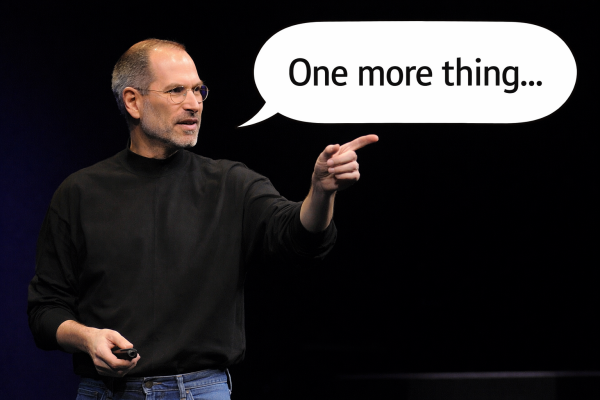
[DigitalToday reporter Chi-gyu Hwang] "Every computer platform reaches its peak after 5 years and then slowly declines. Its own software becomes its prison."
The book "NeXT Steve Jobs," which covers the 12 years after Steve Jobs was forced out of Apple in 1985 and founded NeXT, draws attention for containing themes similar to those stressed by Harvard professor Clayton Christensen in his book "The Innovator's Dilemma."
· [New book] NeXT Steve Jobs: 12 hidden years before Apple's revival began
It is not known whether Christensen influenced Jobs' thinking, but by timing alone Jobs appears to have been viewing the computing landscape early through the frame of the Innovator's Dilemma. Jobs founded NeXT in 1985, and Christensen published "The Innovator's Dilemma" in 1997.
"The Innovator's Dilemma" argues that while powerful companies try to avoid cannibalising their core profit base, startups that initially seem small can create competing products that eventually take over the existing market and overtake incumbents.
During the NeXT era, Jobs shared a similar idea with employees as follows.
"Interesting things happen at the peak," he said to employees. Over 5 years, developers write thousands of programs for your computer. A growing app library of spreadsheets, games and word processors becomes the platform's biggest selling point. But that soon becomes a trap. "All that application software you painfully built up becomes the architecture's biggest liability, because it makes it difficult to pursue innovations that would change or render unusable all those applications."
"If you upgrade the screen size, existing programs may malfunction. If you upgrade the memory system, existing software may crash. Even if you add new features like sound or a colour display, none of the existing software will be able to take advantage of it. Every improvement carried the risk of destroying the very ecosystem that made you successful."
"So you freeze there. Every year you release essentially the same device with incremental upgrades. Meanwhile, your competitors, unburdened by success, make something better. Your developers, bound by old constraints, cannot compete with fresh platforms."
Jobs also presented examples related to his thinking.
"Apple II and the IBM PC, and soon the Macintosh, all followed this pattern," he said. NeXT would reach its peak in about 1993 or 1994 over the next 10 years. He predicted they had 5 good years, maybe 6. If most CEOs knew this, they would cut costs and ship quickly. Steve did the opposite. He thought NeXT had to start with perfection so it would not fall into that pattern."
Did Jobs' thinking about the rise and fall of computing platforms lead to appropriate action? Looking only at the NeXT years, it did not. His judgment that he had to pursue perfection led NeXT to fail to release products on time at an appropriate price. As launches were repeatedly delayed, NeXT's presence in the computing landscape weakened, and Jobs eventually chose to give up the hardware business.
"In early 1997, the pursuit of perfection was swallowing the schedule. Every fix pushed the deadline further back, and long debates over this part and that drove costs higher. But no one could make a decision without Steve, and Steve did not stop pursuing perfection. As Steve demanded revolutionary technology, each delay gave competitors time to catch up and the technology became less novel."
Apple's platform ecosystem today boasts a huge scale, but it seems less fresh, perhaps because it has become too familiar. Many reactions are along the lines of, that is how it is, even when something new comes out. That may be the result of incremental improvements, rather than disruptive innovation, leading the evolution of the Apple ecosystem. It raises curiosity about how Steve Jobs would view today's situation if he were still leading Apple. Borrowing Jobs' thinking from the book, the Apple ecosystem may now be well past the point of 5 years after its peak.
 Chi-gyu Hwang
delight@d-today.co.kr
Chi-gyu Hwang
delight@d-today.co.kr