
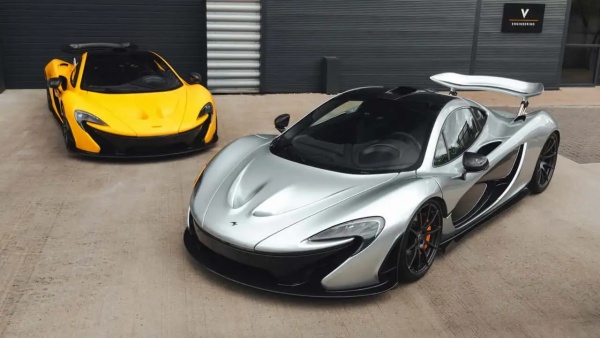
A high-voltage battery upgrade product that can replace the aging battery of the McLaren P1 has been released. The key is about three times more storage capacity and less weight than before.
InsideEVs, an electric vehicle outlet, reported on Aug. 11 that V Engineering, a McLaren specialist engineering company in Berkshire, England, unveiled a replacement-battery project for the P1 called Project Continuum.
The upgrade targets battery performance degradation seen in early-production P1s. The P1 is a plug-in hybrid hypercar introduced in 2013, and the first battery cells installed in customer cars were based on technology from around 2010. As a result, the battery capacity, which was not large to begin with, has shrunk over time, and some cases have failed to deliver expected performance.
The replacement battery from V Engineering swaps in directly for the existing McLaren original high-voltage battery. The company introduced it as a "plug-and-play" replacement. The new battery uses high-performance 21700 lithium-ion cells to raise total capacity to 12.4 kWh. That is a sharp increase from the original battery's 4.72 kWh.
It is also lighter. The new battery pack is about 51 pounds, or about 23 kg, lighter than the existing components used by McLaren. That could help improve vehicle performance as well as expand storage capacity. Because the P1 can run on electric power alone, the higher capacity could increase electric-only driving range in urban driving.
But given the P1's character, the significance of the upgrade does not stop at extending electric-only range. The P1 produces total system output of 903 horsepower. Because the high-voltage battery plays a major role in supporting strong acceleration in high-speed or track driving, battery condition is directly linked to maintaining the car's original performance.
V Engineering said it developed the upgraded battery with engineers who participated in the original P1 development project. It also said the new product was designed around battery modules and configured to meet FIA Formula E requirements. The company also stressed that it considered durability and performance based on conditions in which electric race cars are pushed to the limit throughout a race.
The announcement also shows that high-performance plug-in hybrid vehicles introduced in the early 2010s have entered a phase of battery aging. The McLaren P1, along with the Porsche 918 Spyder and the Ferrari LaFerrari, was known as the so-called "holy trinity" of cars, but it had separate symbolic meaning as the world's first plug-in hybrid hypercar. The Porsche 918 Spyder also had a plug, but its production-model unveiling came a few months later than the P1.
Against this backdrop, the P1 battery replacement market could extend beyond simple repair demand to demand for extending vehicle life and restoring performance. V Engineering said it plans to begin installing the upgraded battery in customer cars from next spring. It is currently discussing applying the battery upgrade with owners around the world.
 Jinju Hong
hongjj@d-today.co.kr
Jinju Hong
hongjj@d-today.co.kr