
The government will use artificial intelligence to overhaul the materials research and development system. It will shift materials development, which has been a long-term and high-cost structure, to one centred on AI models, robotic experiments and data platforms to speed up efforts to secure advanced and future materials.
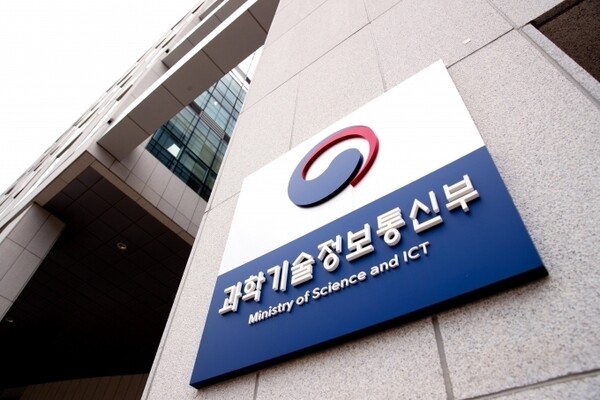
The Ministry of Science and ICT on Wednesday deliberated and approved the "Strategy to Build an AI Materials R&D Platform (2026-2030)" at the eighth meeting of ministers related to science and technology held at the Government Complex Seoul.
To improve the accuracy of new materials design and dramatically cut development time, it will support the independent development of "materials AI models". It will develop "property AI models" that predict each of six key material properties - mechanical, magnetic, electrical, chemical, thermal and optical - and a "multi-property AI model" that simultaneously predicts and designs correlations among the six properties. It also plans to enable researchers to lead the entire R&D process through an "AI materials research companion" that links materials AI models, autonomous experimentation and a data platform into one.
It will also build field-specific "AI materials dedicated autonomous experimentation centres" that automate experiments and verification around the clock, from materials synthesis to prototype manufacturing. The centres are laboratories that combine robots and AI to carry out the entire process of design, synthesis, analysis and evaluation of materials on their own.
In the second half of this year, it will designate a tentative "National Materials Research Data Integration Center" and build a tentative "National Materials Research Data Integration Platform" by expanding and reorganising the functions of the materials research data ecosystem platform.
The meeting also approved the 추진 direction for the NEXT project to lead national strategic technologies. It will expand national strategic technology R&D investment to more than 60 trillion won over the next 5 years and 집중 support key projects to achieve national missions. It also plans to build a "NEXT Alliance" together with cross-government bodies and industry, academia and research institutes, and focus on generating outcomes throughout the entire project process.
It also finalised a draft "Strategy to Build Global AI Innovation Hubs" to re-establish existing overseas IT support centres as full-cycle AI support bases, called KAIN, and a draft "Science and Technology Support Measures to Strengthen Drug Response Capabilities" to block drug problems in advance with advanced science and technology.
The Ministry of the Interior and Safety also decided to apply mobile services to OnAI, which incorporates private-sector latest technologies such as AI, and push for expansion across all central administrative agencies. The meeting's first agenda item, a draft "Data Policy 추진 Direction in the Era of the Great AI Transformation", will be finalised later based on the discussion held on the day.
Deputy Prime Minister Kyeong-hoon Bae (배경훈), who also serves as science and ICT minister, said, "The government will expand multifaceted global cooperation for AI-based science and technology innovation, advancement of the AI ecosystem and responsible use of AI." He added, "We will show the public results from the government's AI investment and support."
 Jin-ho Lee
jhlee26@d-today.co.kr
Jin-ho Lee
jhlee26@d-today.co.kr