
Telecommunications and broadcasting are part of daily life. Behind them, unseen technology competition and industry change continue. Shintongbangtong is a series that explains trends in telecom and broadcasting technology and markets in an easy and engaging way. It also looks at the latest technology, policy and market changes with added on-the-ground context.
[DigitalToday reporter Jin-ho Lee (이진호)] Suppose you turn on Netflix in Seoul and start a movie. The video data that appears on screen does not cross the Pacific each time from Netflix servers in the United States. A common method is to load and play content that has been stored in advance on a server closer to the user.
In an era when tens of millions of people watch video and download games at the same time, sending all data from a single original server is inefficient. The farther the distance between users and servers, the longer the network path data must travel. If traffic concentrates on a particular server or line, the likelihood of slower speeds also increases. The technology that addresses this is the content delivery network (CDN).
Users get content placed nearby, with distance the key
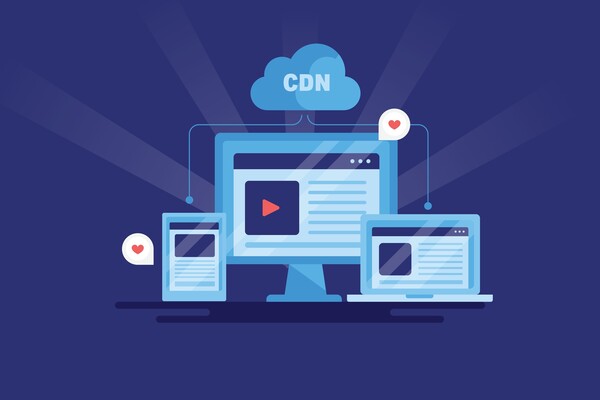
The principle of a CDN is relatively simple. Instead of keeping content such as video, images and game installation files only on one original server, it stores them in a distributed way on servers located across multiple regions. When a user requests content, a CDN server closer than the original server sends the data instead.
Servers that store replicated content are often called cache servers or edge servers. This structure shortens response time by reducing the physical and network distance between users and data, while also distributing traffic that would otherwise concentrate on the original server.
Not all content is always stored on a nearby server. If the requested data is in the cache, it is sent immediately. If not, the data is fetched from the original server or another higher-level server and then delivered. The key point is that users do not have to repeatedly go all the way to a distant original server each time they request the same content.
Netflix is a representative example. Netflix operates its own CDN called Open Connect. It places dedicated servers called Open Connect Appliances, or OCA, inside internet service provider networks, or connects directly to servers at internet exchange points.
When a user plays a video, if the relevant content is on a nearby OCA, the video data is sent from there. Netflix says OCAs installed within ISPs handle traffic by distributing content by region, and required content is periodically filled and updated.
Google, which operates YouTube, uses a similar structure. It installs Google Global Cache, or GGC, inside ISP networks to provide some Google content closer to subscribers. Google explains that this can reduce the traffic burden on external ISP networks and on interconnection segments.
CDNs reduce bottlenecks by spreading countless requests across servers
The effect of a CDN is most evident when users flock at once. When a new season of a popular drama is released or a sports match begins, the number of users watching the same content surges in a short time. If a single original server handles all those requests, bottlenecks can occur not only on the server but also on the network connected to it.
A CDN splits that load across multiple servers. Users in Seoul receive content from Seoul or a nearby network hub, while users in other regions receive it from hubs close to their areas. It can also be configured to route to other servers when a specific server has a problem.
Still, a CDN alone does not completely eliminate video interruptions. The last segment connected to the user also has an effect, including the user's Wi-Fi environment, the quality of the mobile network and device performance. That is why over-the-top services use adaptive bitrate technology, or ABR, which changes video quality depending on network conditions, together with CDNs.
Telecom and cloud providers also run CDNs, using nationwide networks and data centres
CDNs are not a technology operated only by platforms such as Netflix or Google. South Korean telecom and cloud providers also offer CDN services based on nationwide telecom networks and data centres. SK Broadband operates a CDN that supports live streaming and large downloads. KT Cloud also provides a CDN service that distributes and delivers large content across multiple hubs.
Telecom operators directly own the networks that connect to users, making it advantageous to place content at network hubs close to users. Because a CDN can reduce traffic travelling across long-distance segments and distribute loads when large-scale access occurs, CDNs and telecom networks are closely linked.
In the end, what a CDN shows is that distance matters even on the internet. You can connect to servers anywhere in the world, but perceived speed and service quality can differ depending on how far data must be sent and where it is processed. This structure is also why we can quickly watch high-quality video after pressing play on Netflix. It is possible because CDN servers distributed across multiple regions send content from locations close to users.
 Jin-ho Lee
jhlee26@d-today.co.kr
Jin-ho Lee
jhlee26@d-today.co.kr